

Abdullah
CEO
Our abrasive tools factory meets stringent global safety standards.
Cut-off wheels, also known as cutting discs, are bonded abrasive tools designed for straight-line cutting of metal and other hard materials. They are commonly used on angle grinders and stationary cutting machines to cut steel profiles, pipes, sheets, and structural components.
Unlike grinding wheels, which are intended to remove material and shape surfaces, cut-off wheels are optimized for penetration speed, cutting stability, and minimal material loss. Their performance directly affects cutting efficiency, heat generation, burr formation, and operator safety.
From a manufacturing perspective, a cut-off wheel is not a simple consumable. It is a composite product whose behavior depends on abrasive grain selection, bond formulation, fiberglass reinforcement, pressing method, and curing control. Small changes in any of these factors can lead to large differences in cutting feel, wheel life, and breakage risk.
This page explains how cut-off wheels are made, how different designs behave in real use, and how to choose the right product based on material, application, and operating conditions.
Flat cut-off wheels, often referred to as Type 1 or T41, are the most widely used cutting discs. They have a straight profile and are designed for perpendicular cutting.
They are commonly used for:
Carbon steel bars and profiles
Pipes and tubes
Sheet metal
General fabrication work
Flat wheels provide good control and consistent cutting depth, especially when the tool is kept square to the workpiece.
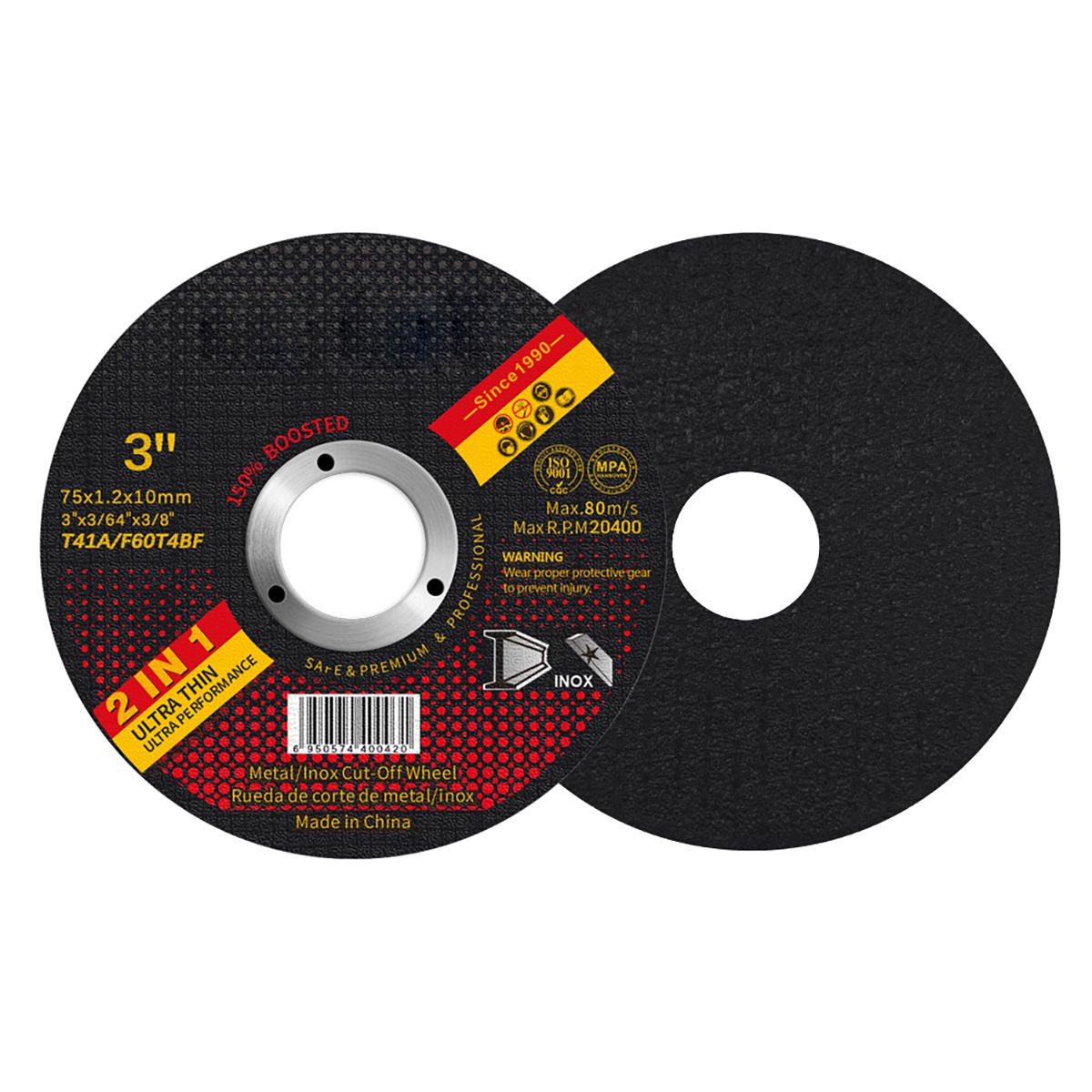
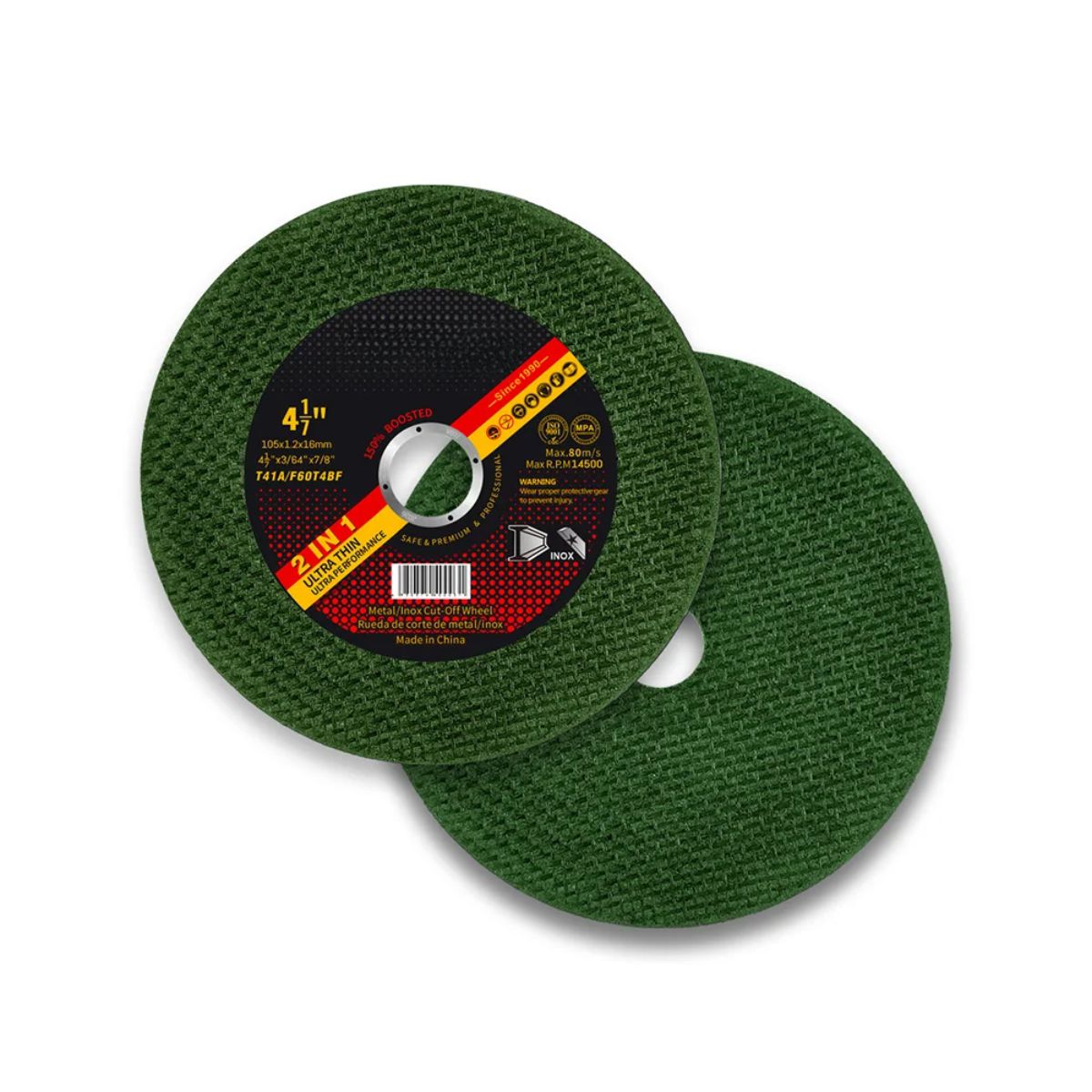
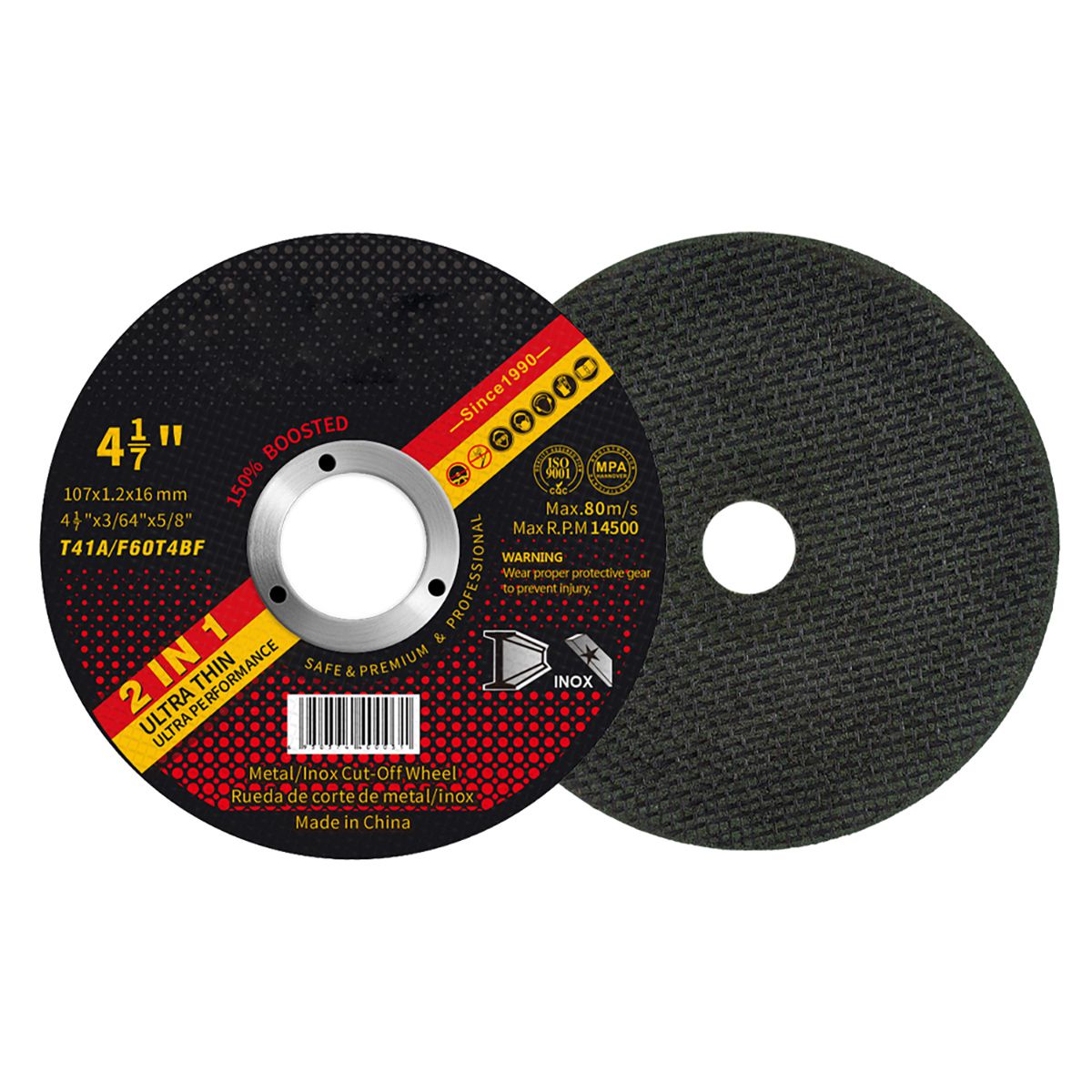
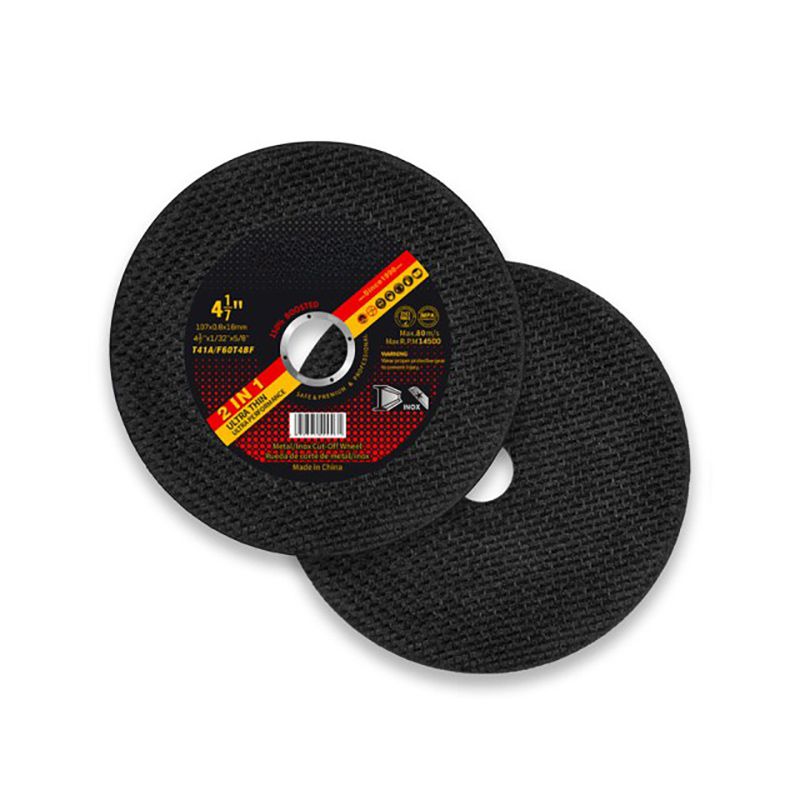
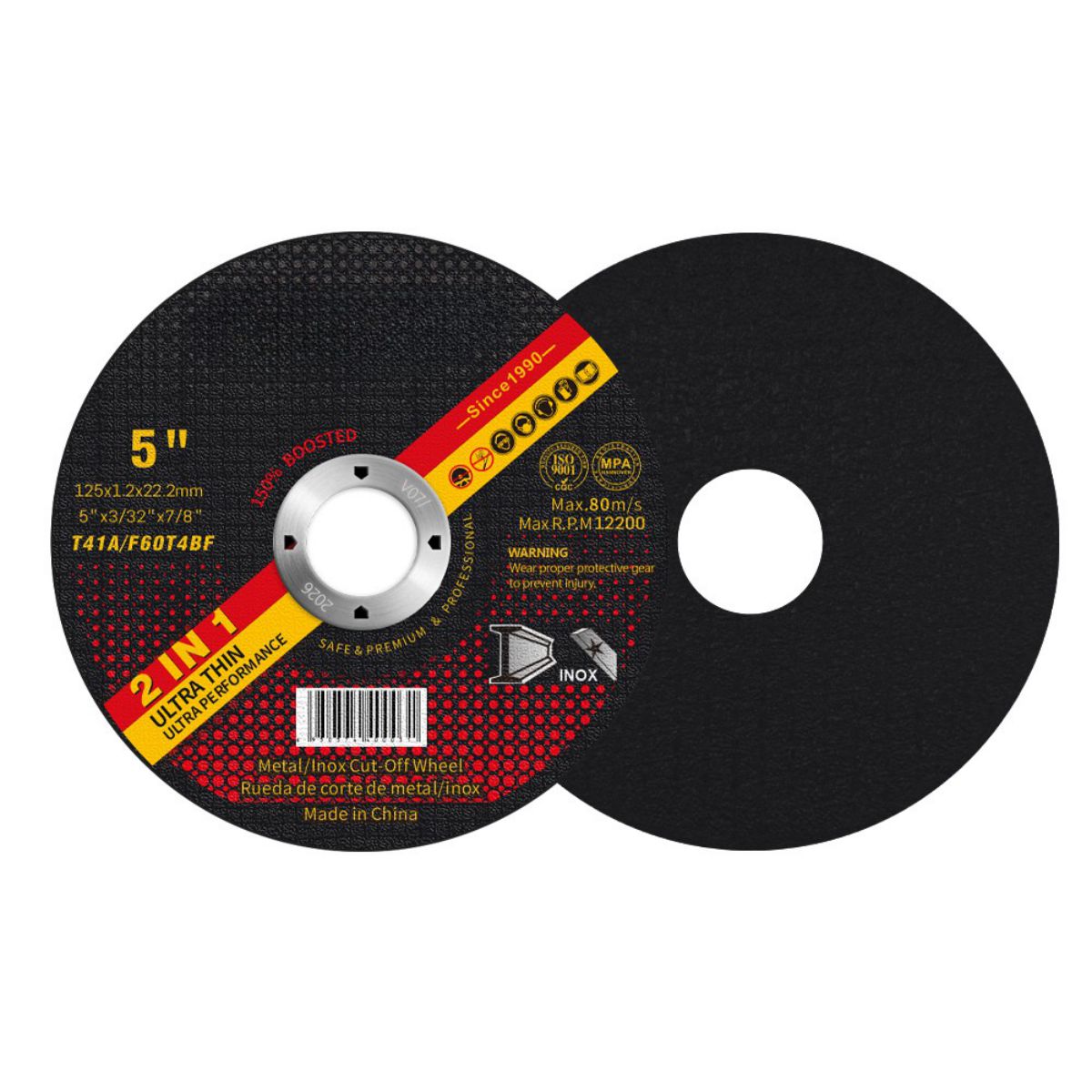
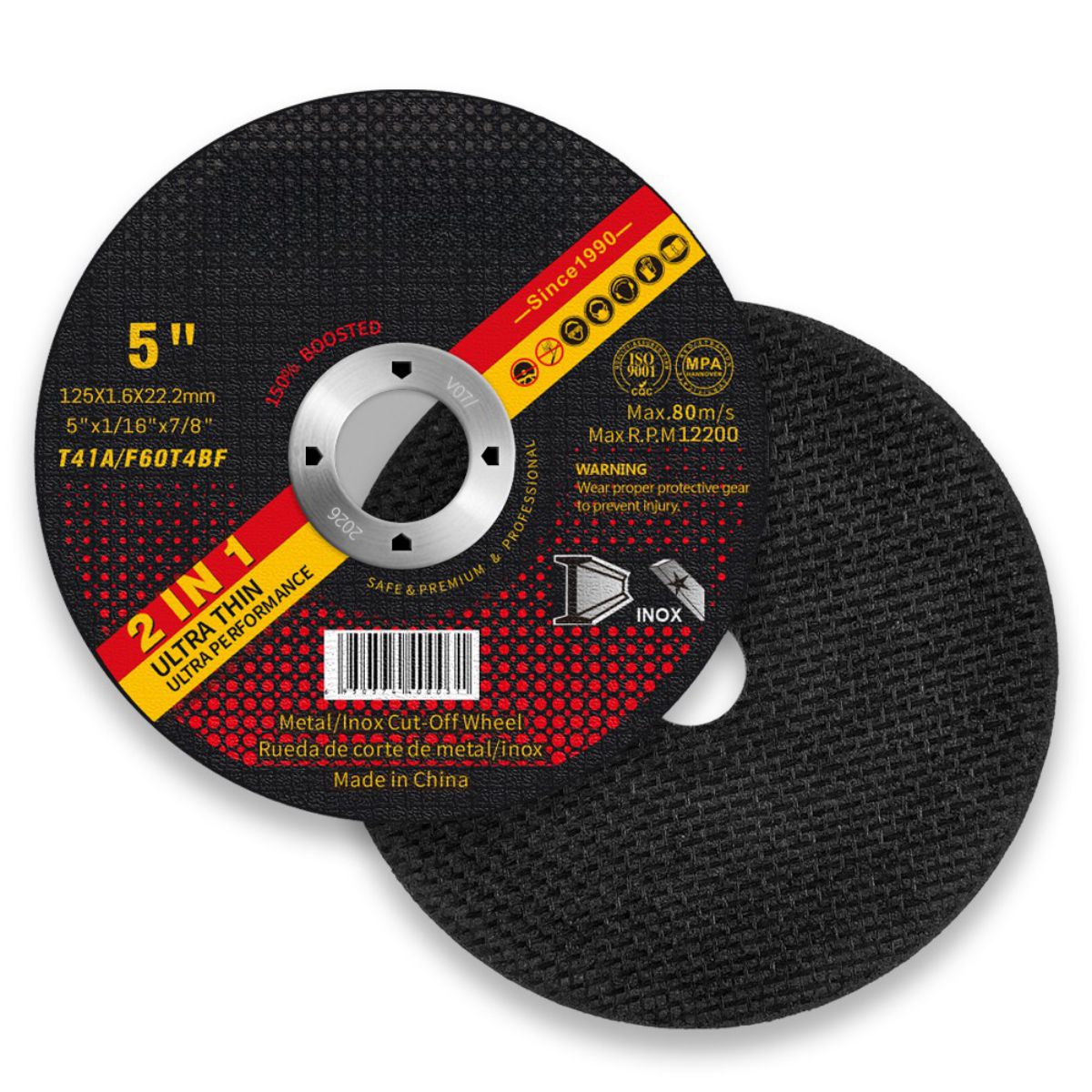
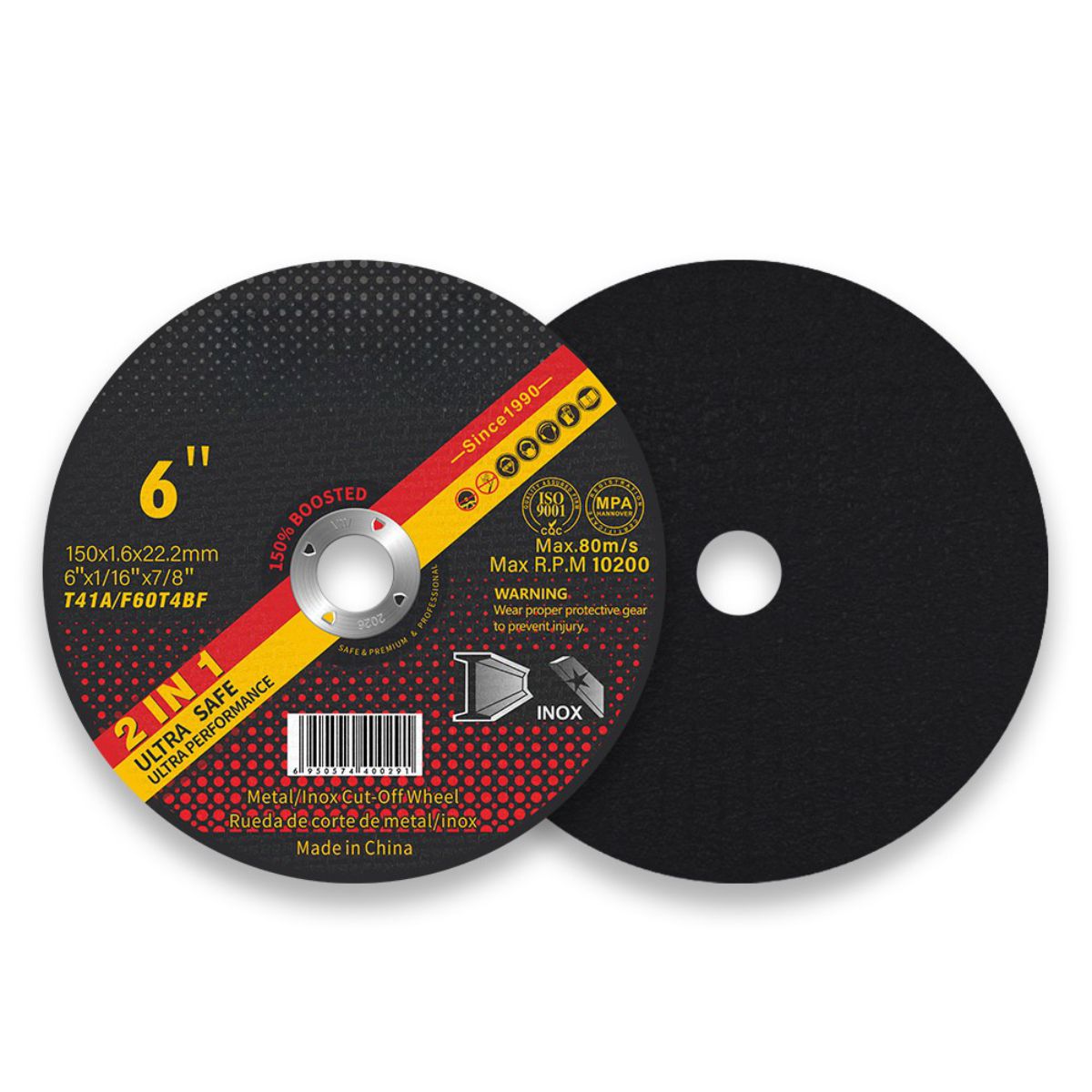

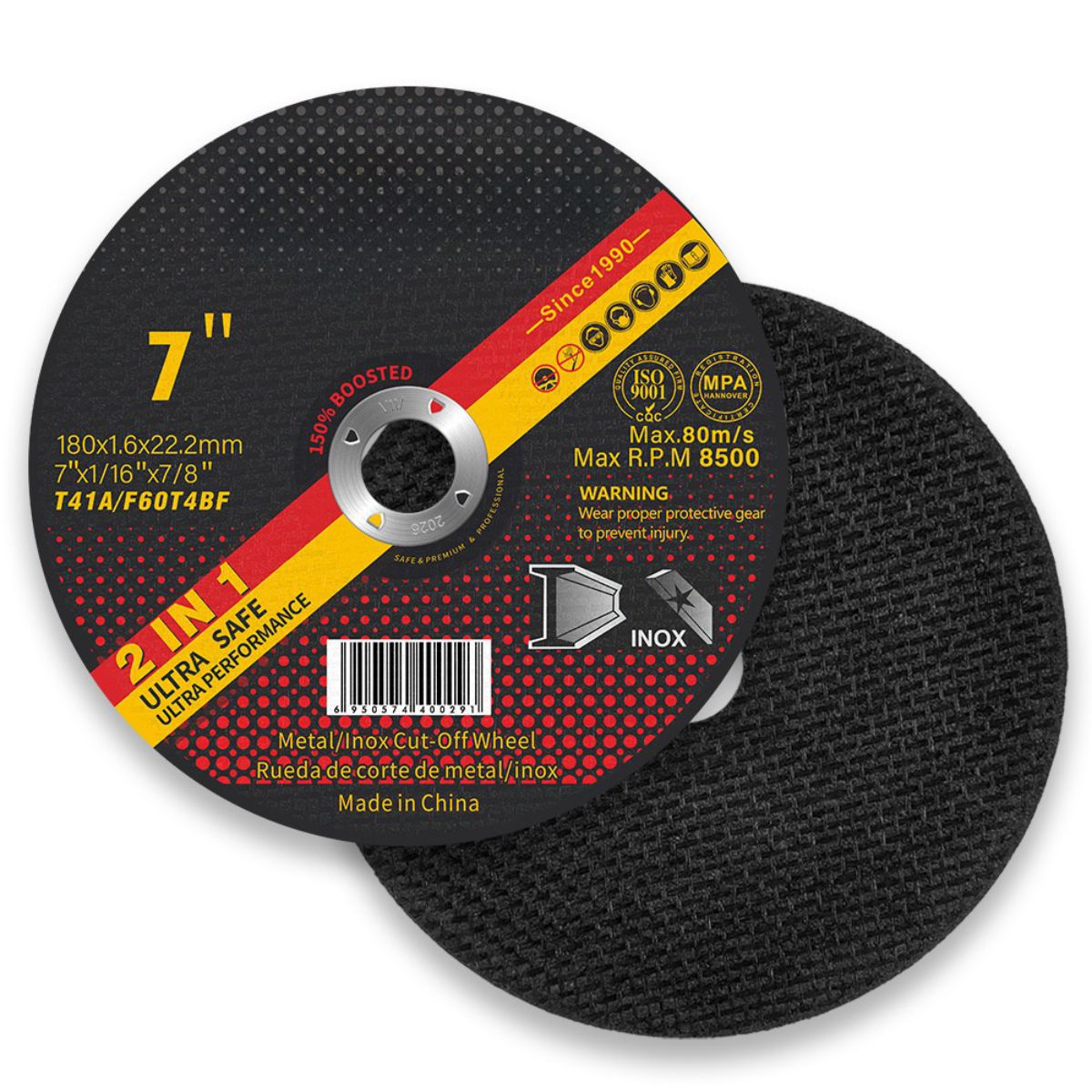
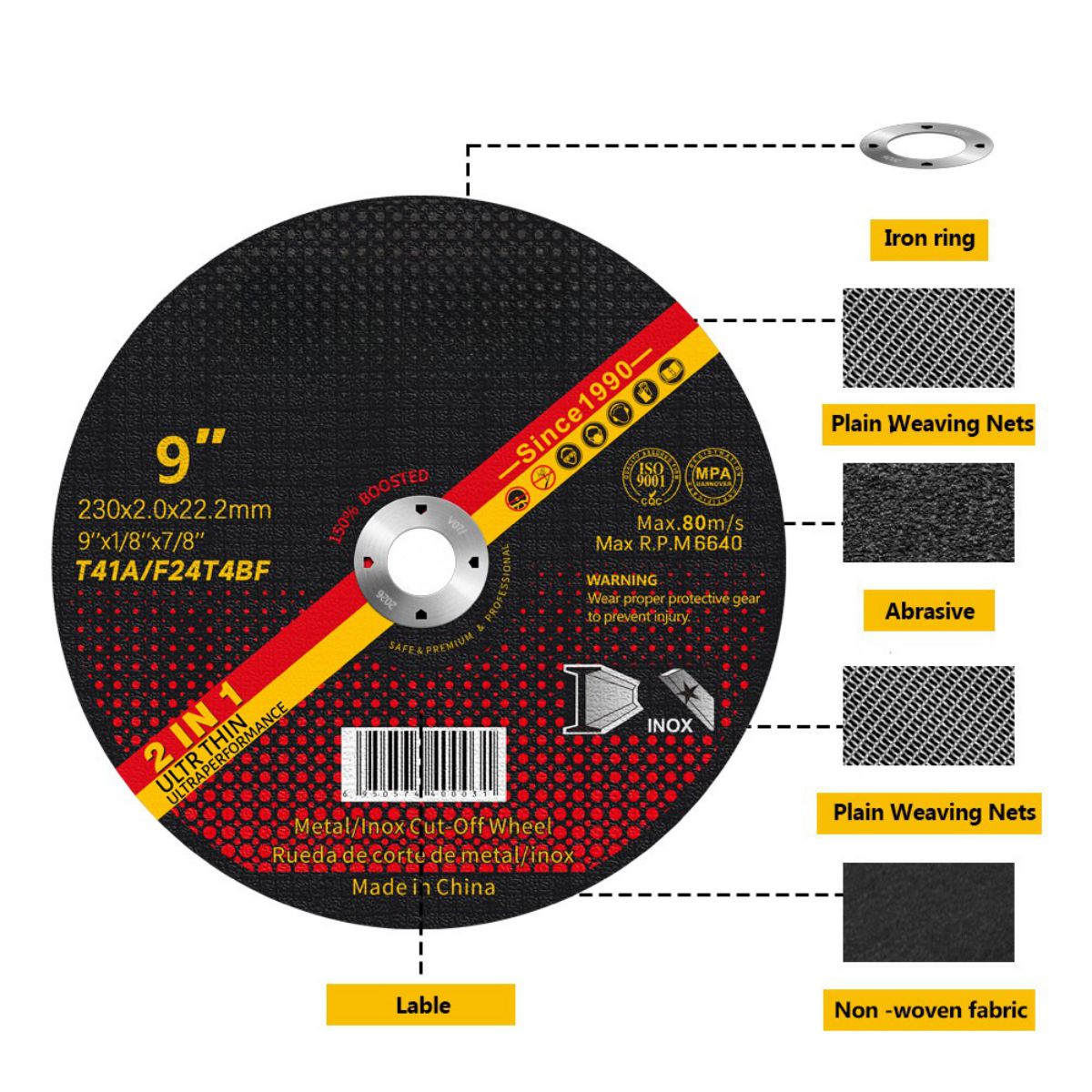
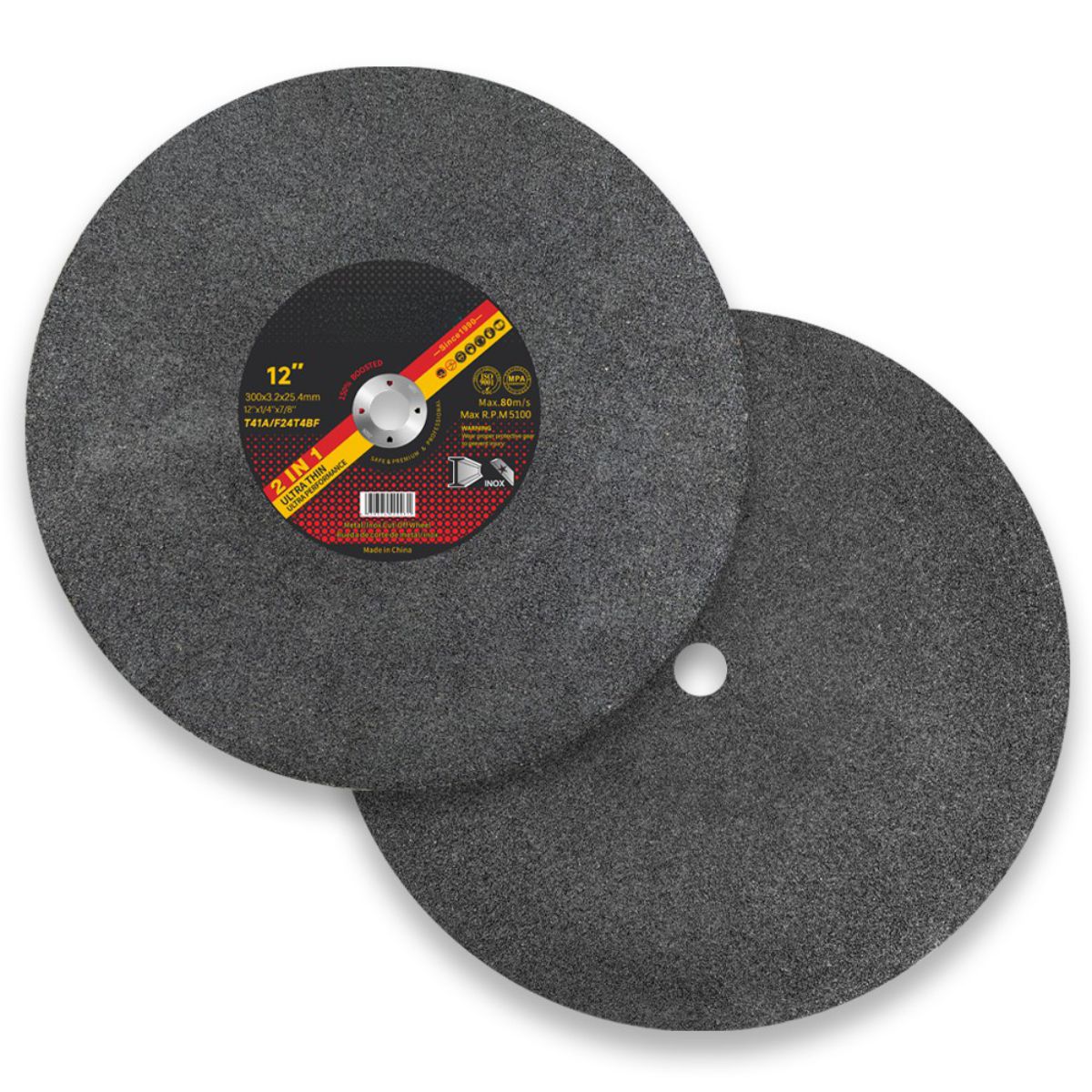
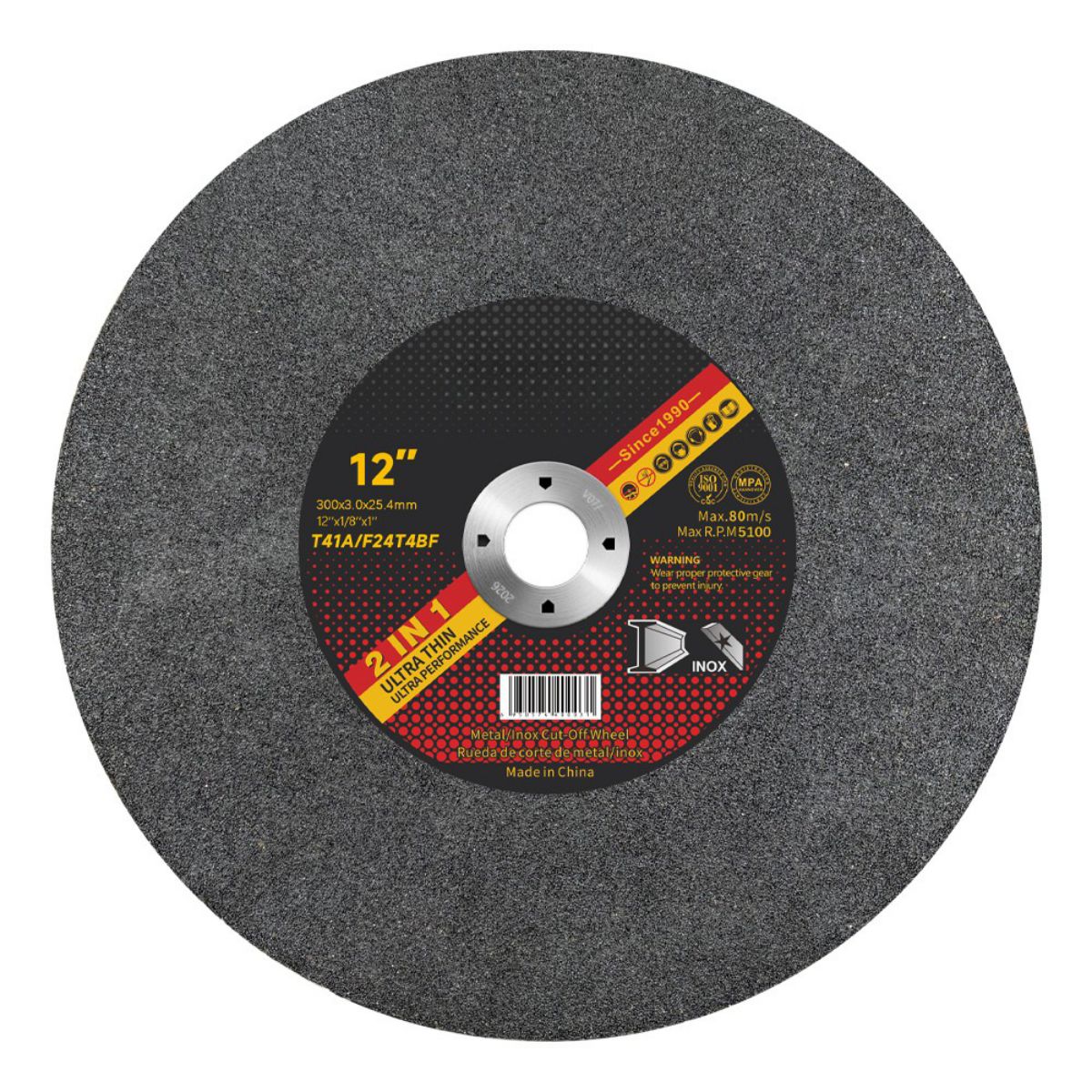
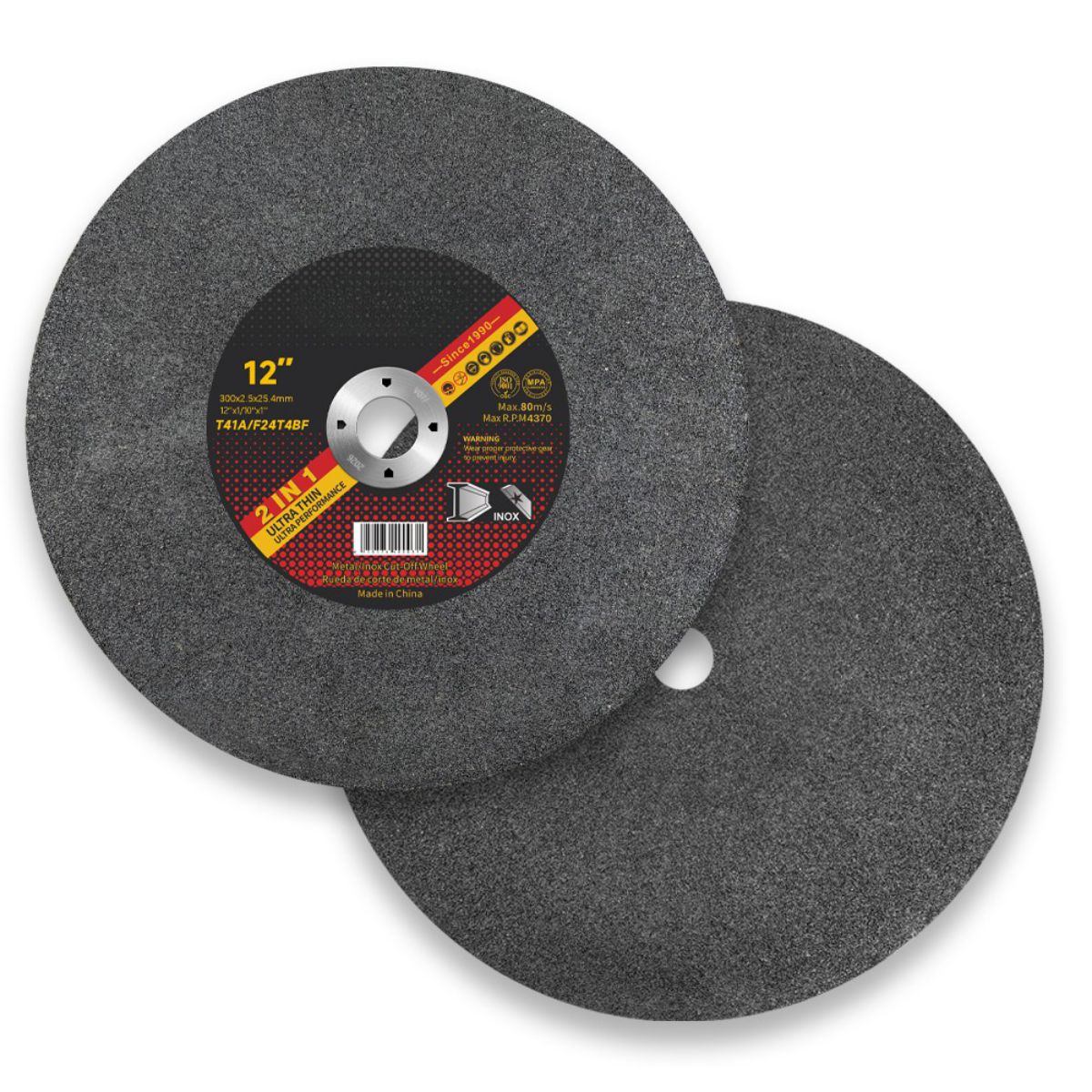
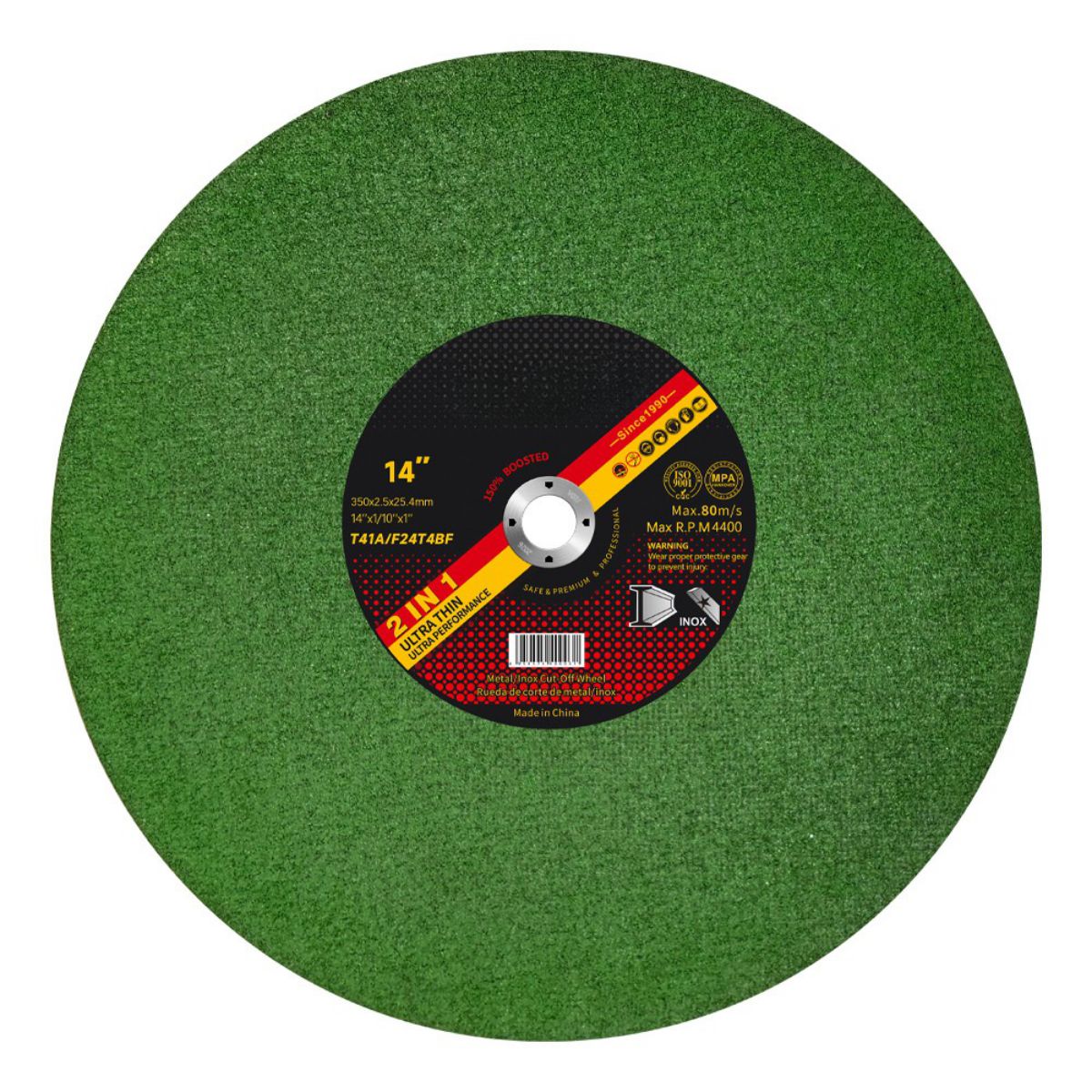
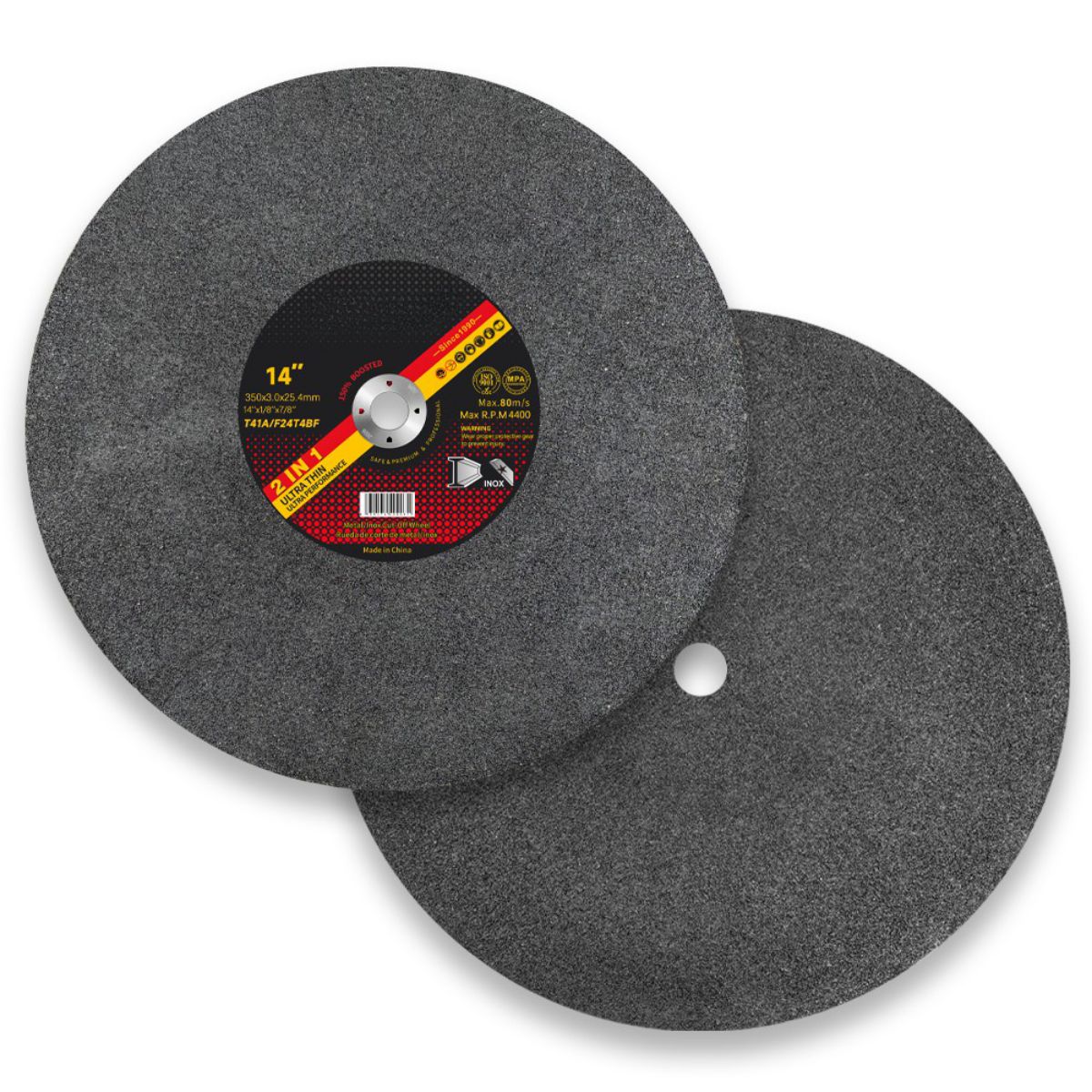
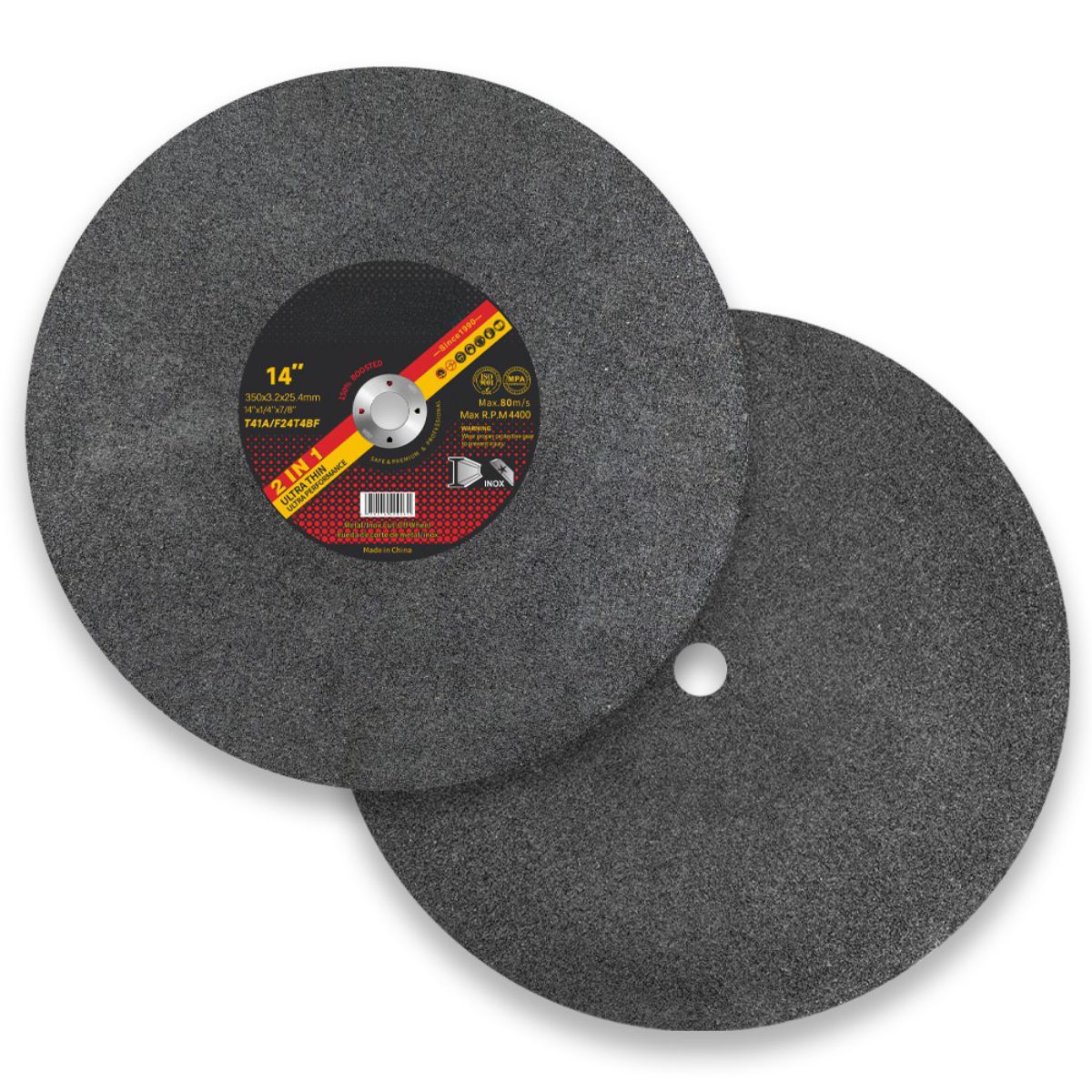
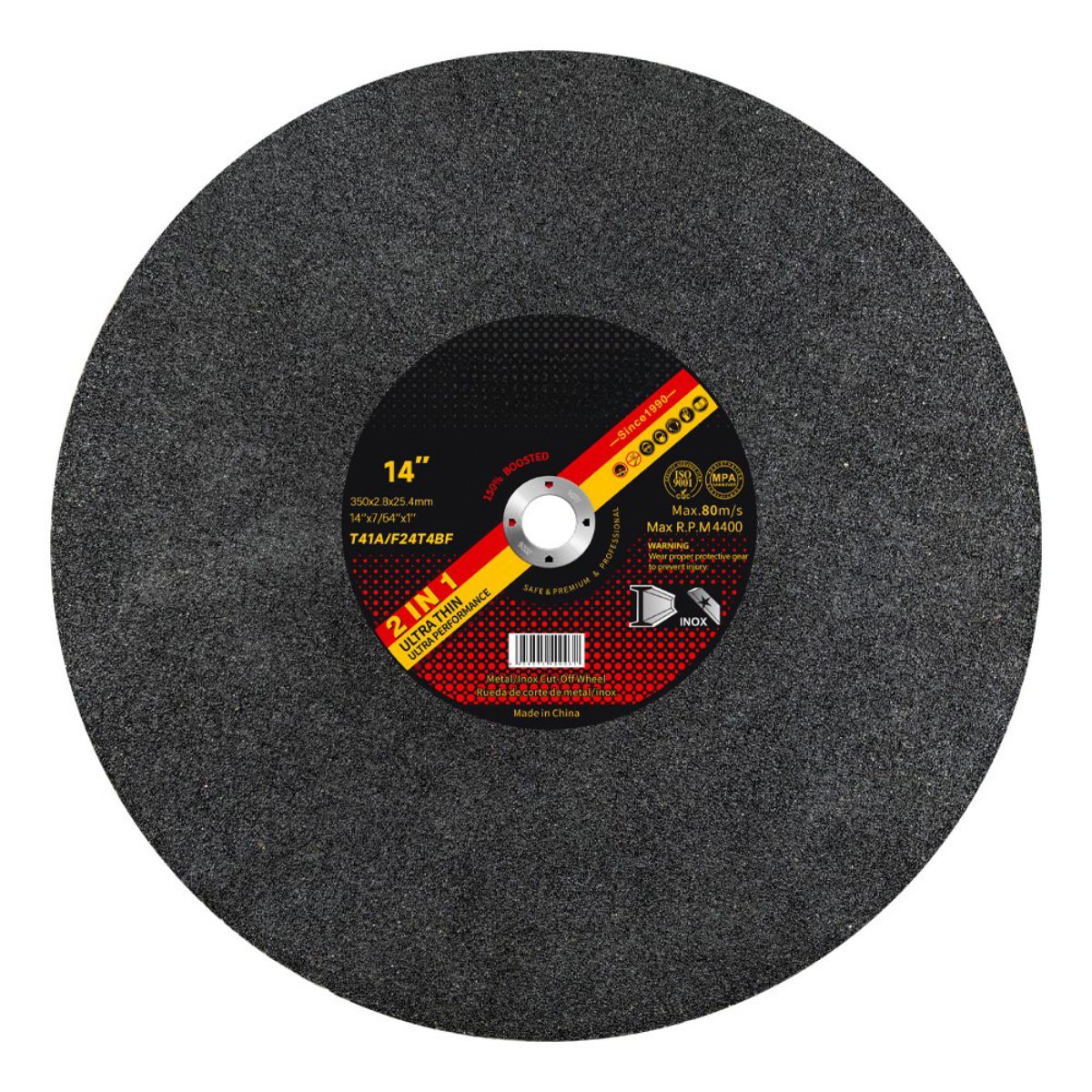
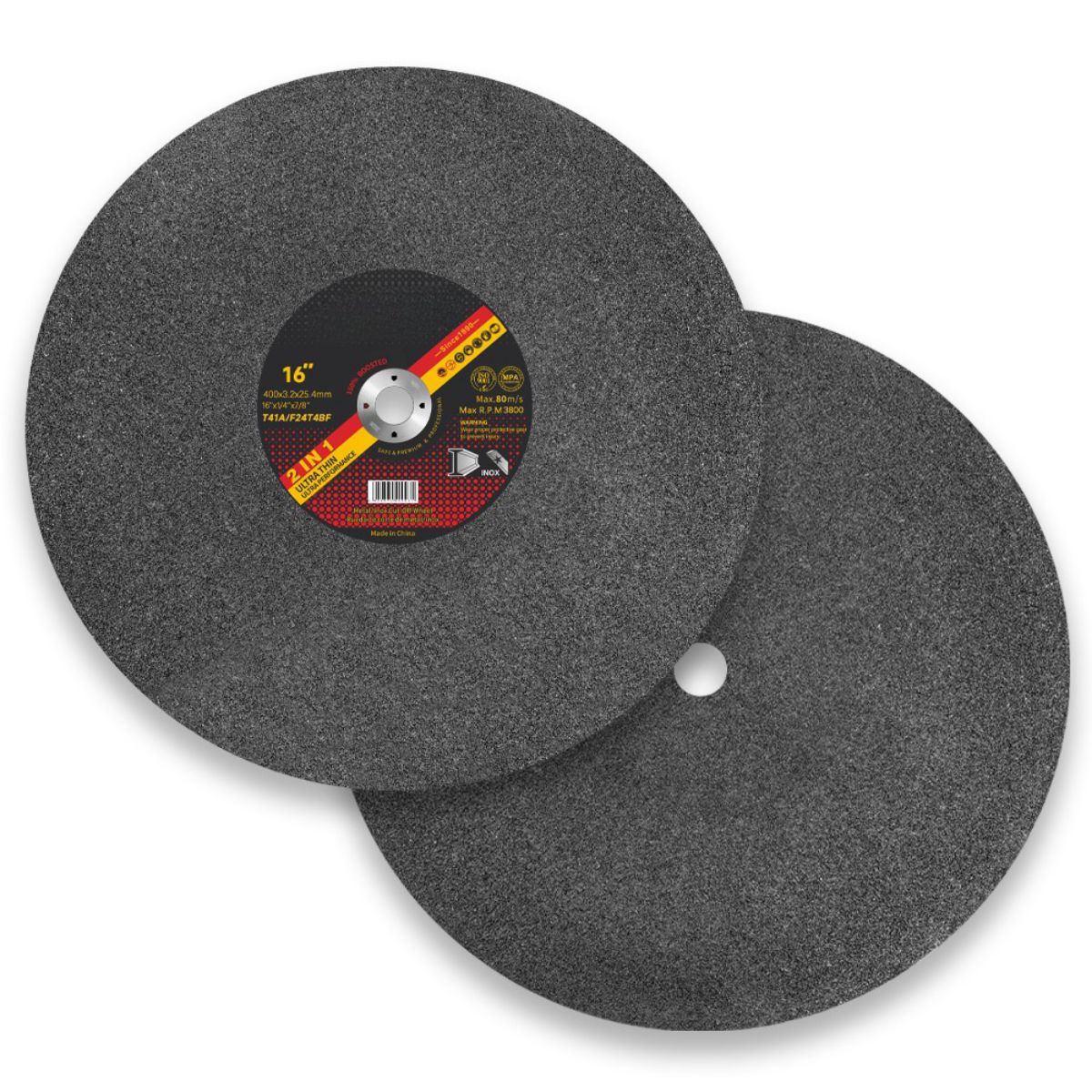
Depressed center cut-off wheels, sometimes identified as T42, have a recessed hub area. This design allows better clearance between the grinder body and the workpiece.
They are typically selected when:
Slight angular cutting is required
Tool clearance is limited
Operators prefer improved handling
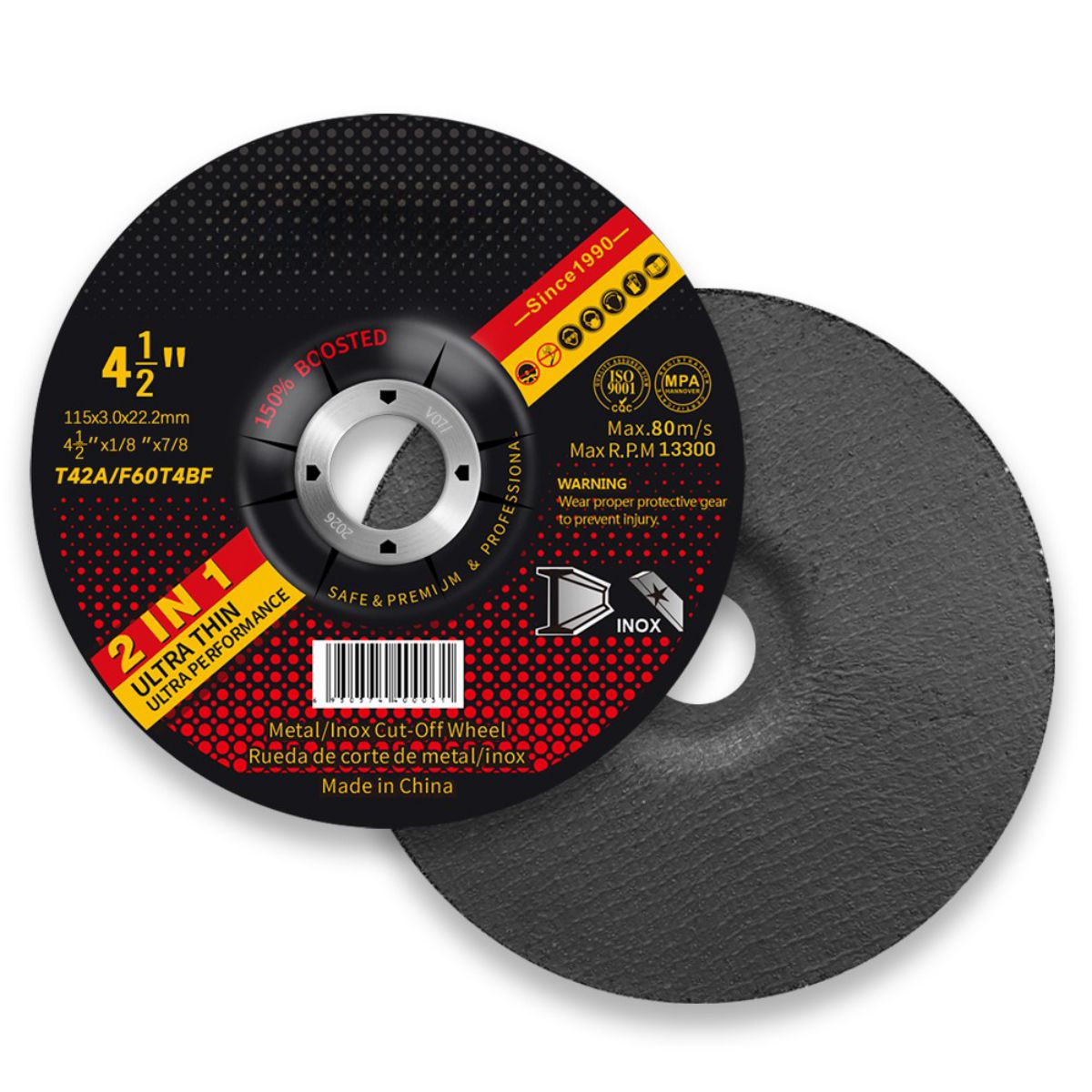
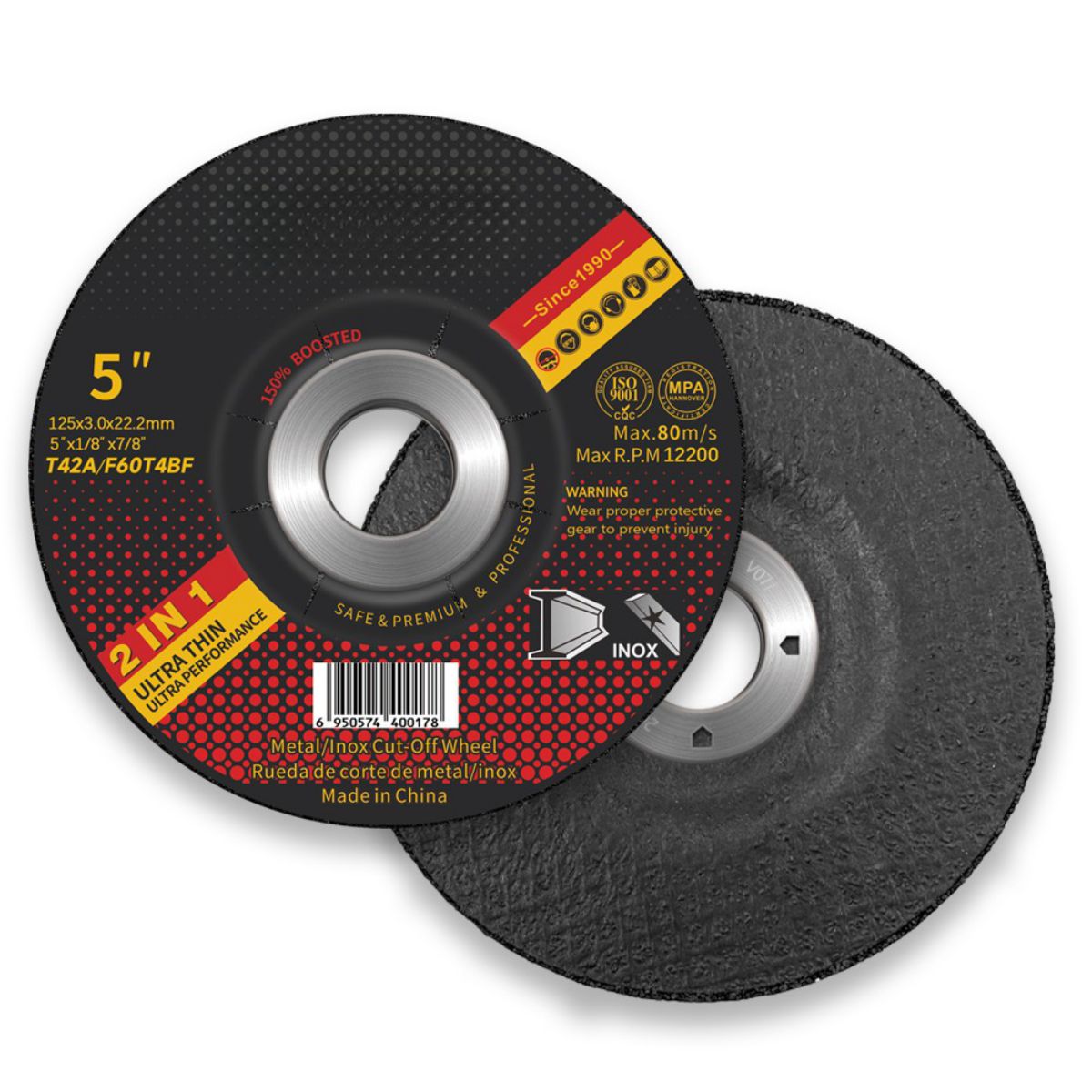
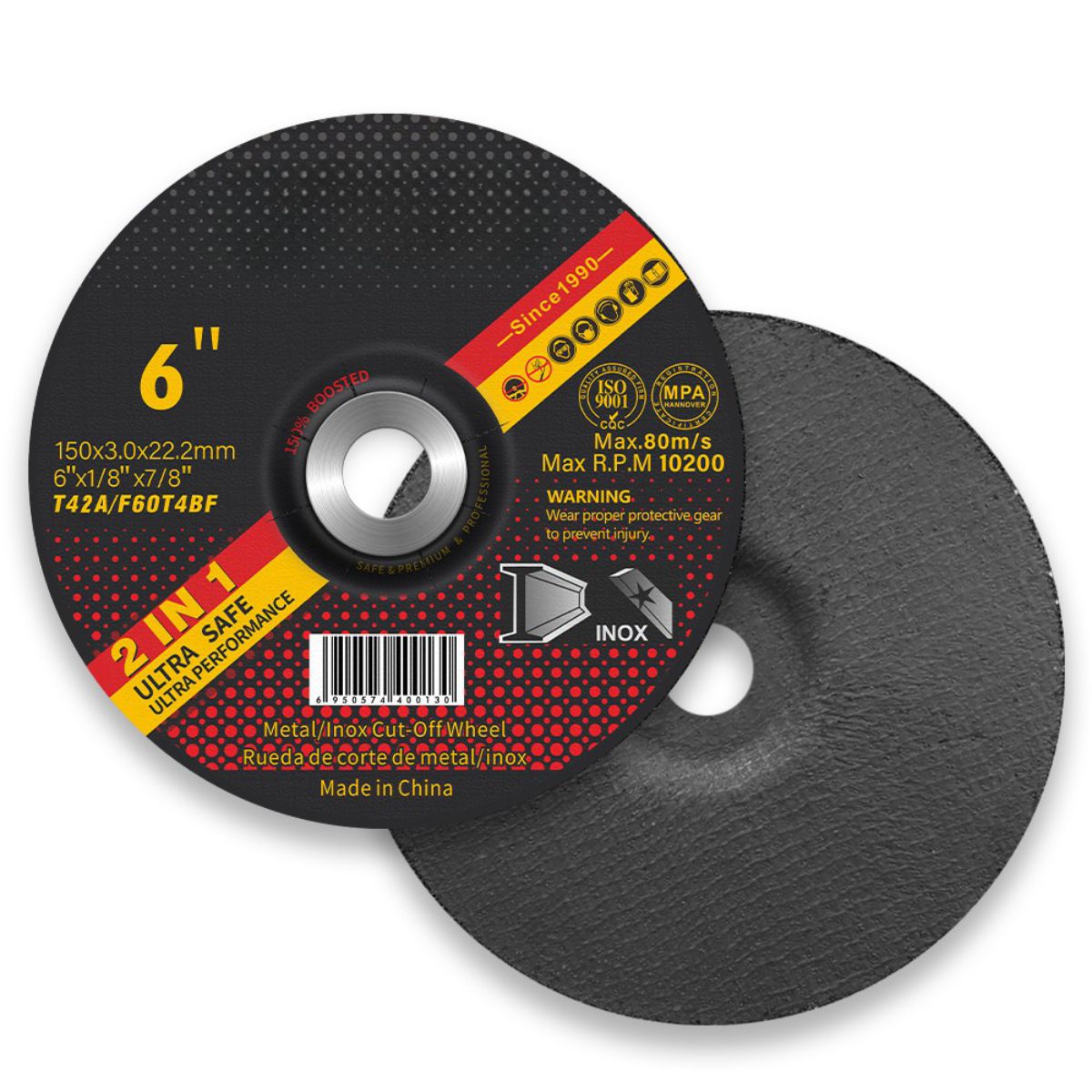
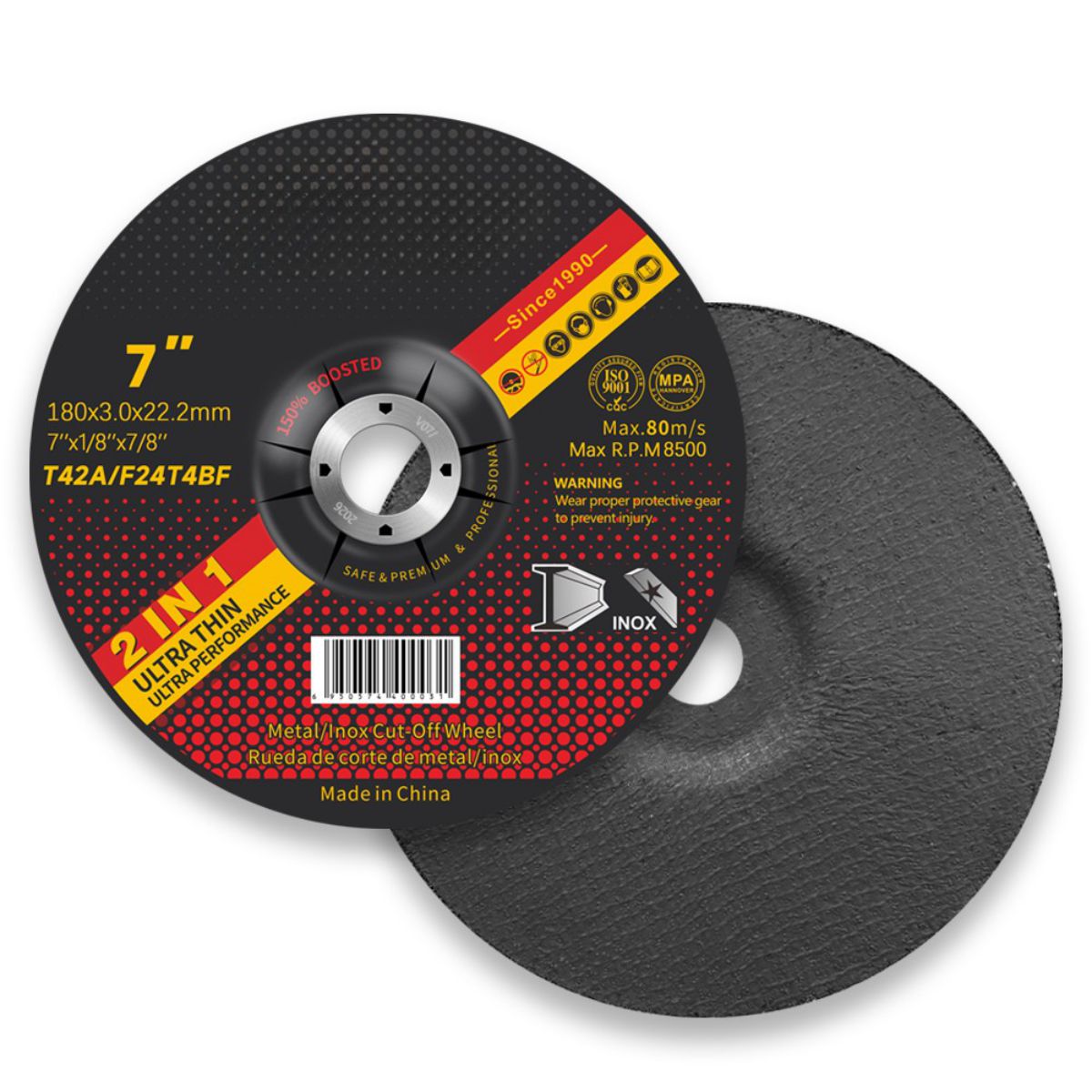
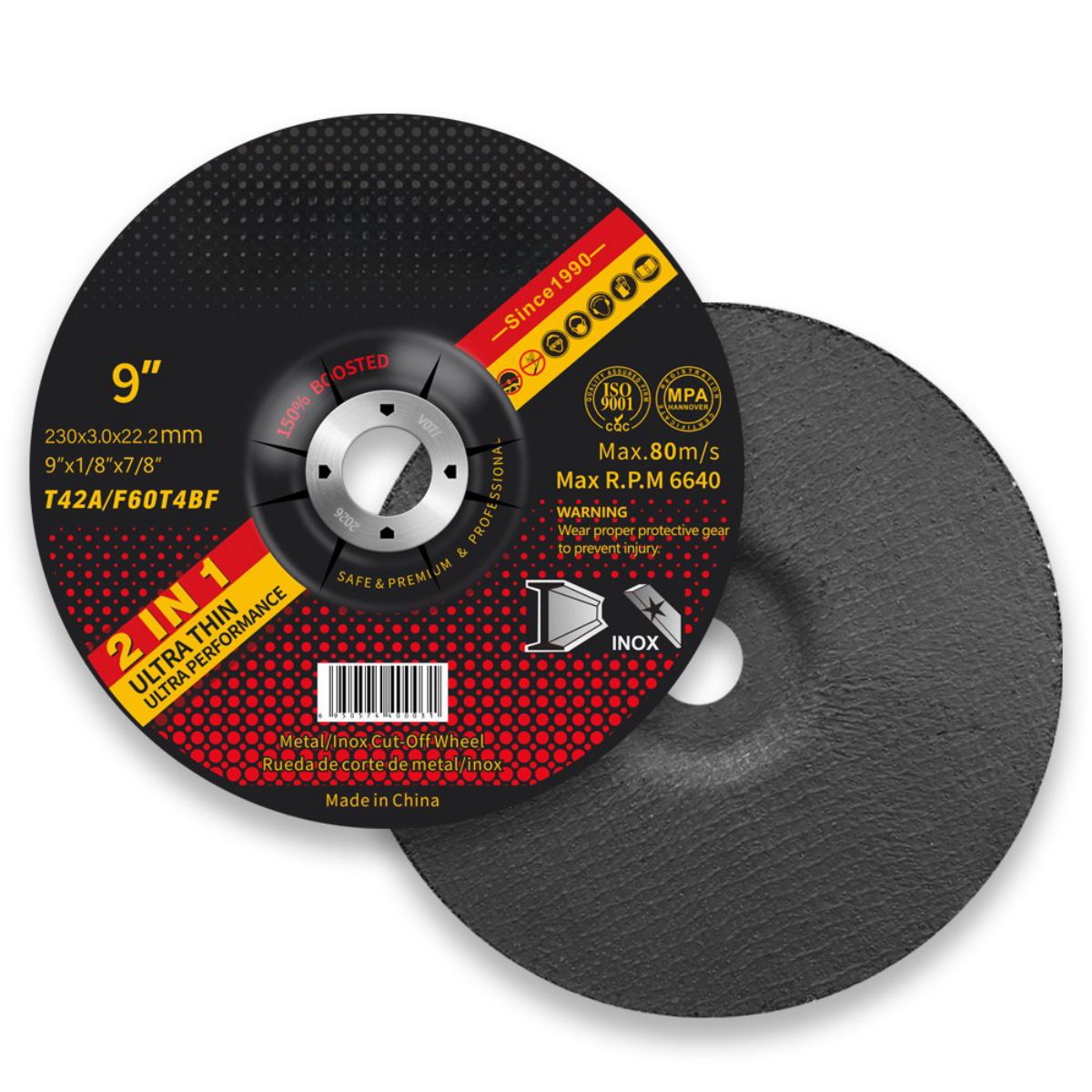
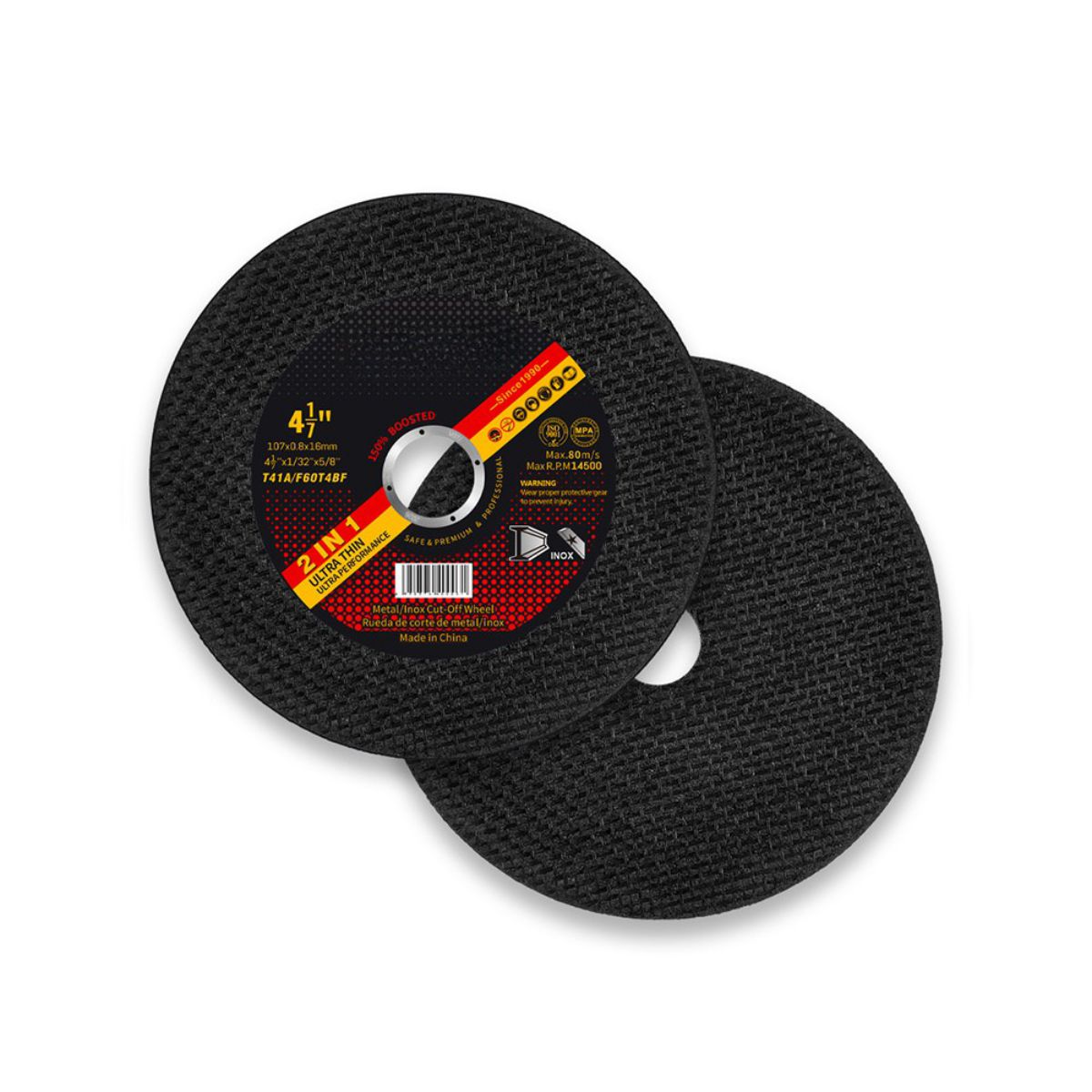
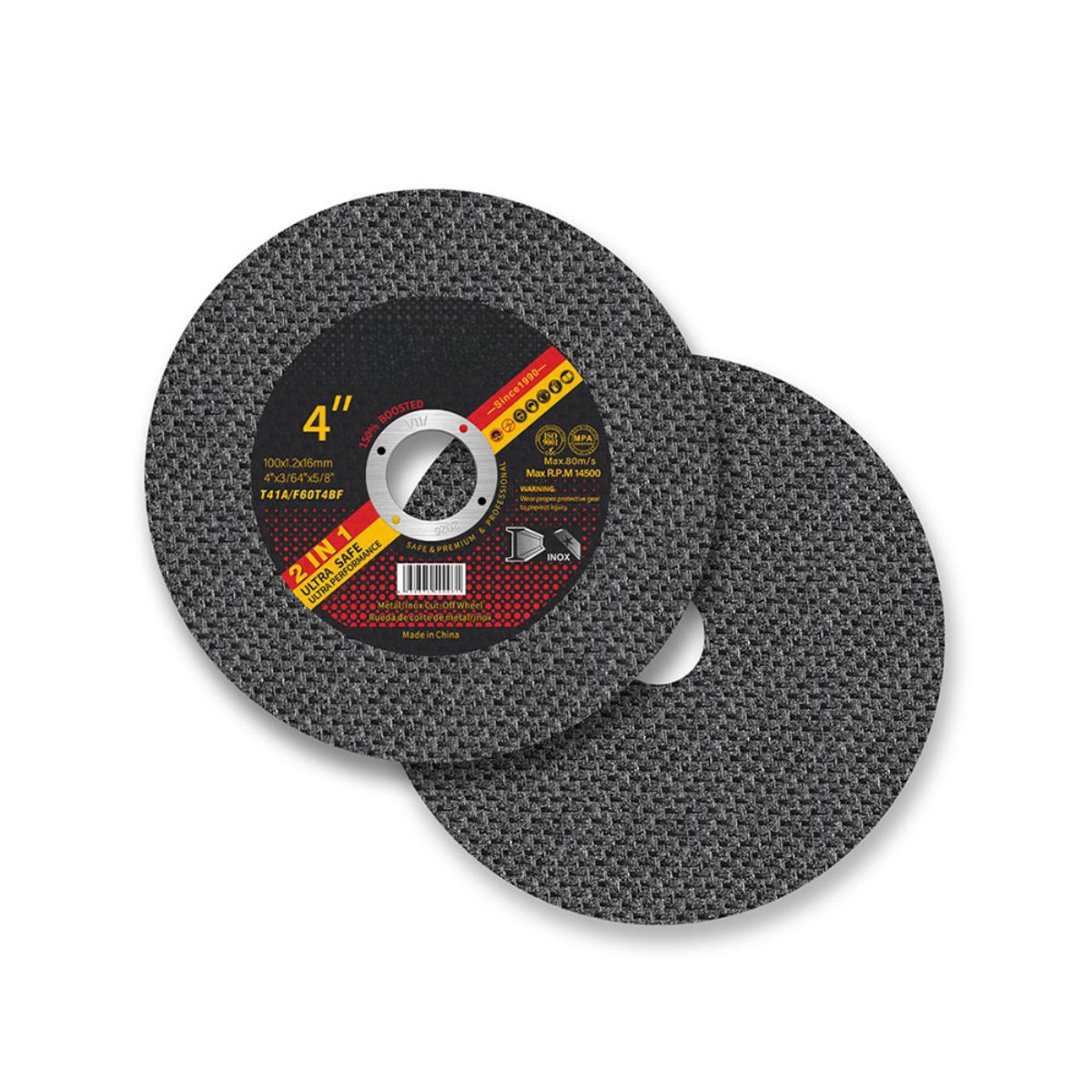
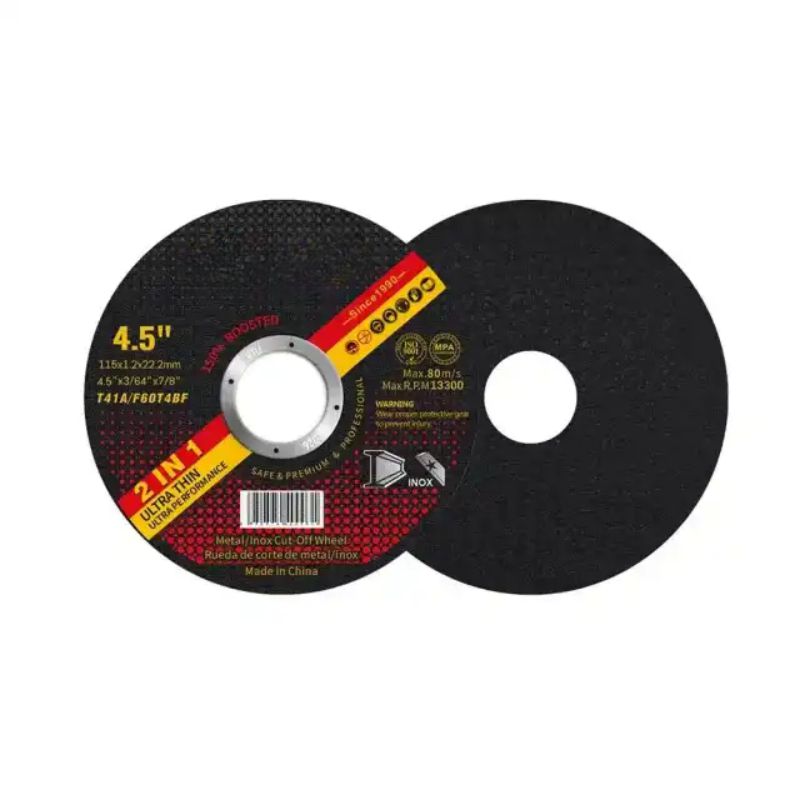
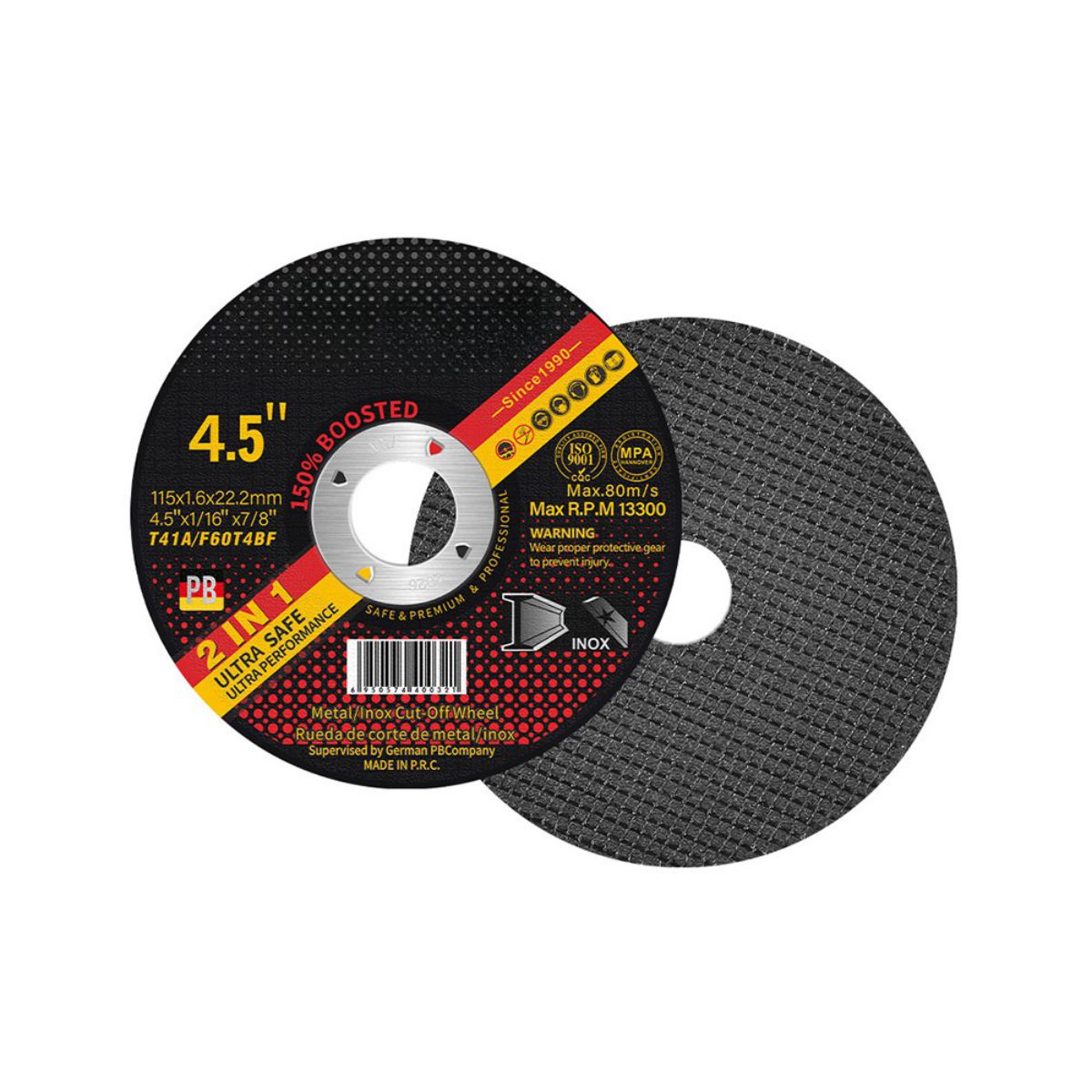
Super thin cut-off wheels, typically 1.0 mm or 1.2 mm thick, are designed for high-speed cutting with low cutting resistance.
In practice, thinner wheels offer:
Faster cutting speed
Reduced heat input
Cleaner cut edges
Lower burr formation
They are widely used for stainless steel and thin-wall materials, where excessive heat can cause discoloration or deformation.
However, thin wheels also place higher demands on manufacturing consistency and reinforcement design. This is one of the reasons why not all thin cut-off wheels perform equally in real-world use.
Large diameter cut-off wheels, generally above 300 mm, are used on stationary cutting machines or heavy-duty equipment. These wheels require stricter control of balance, density, and reinforcement due to higher peripheral speeds and cutting loads.

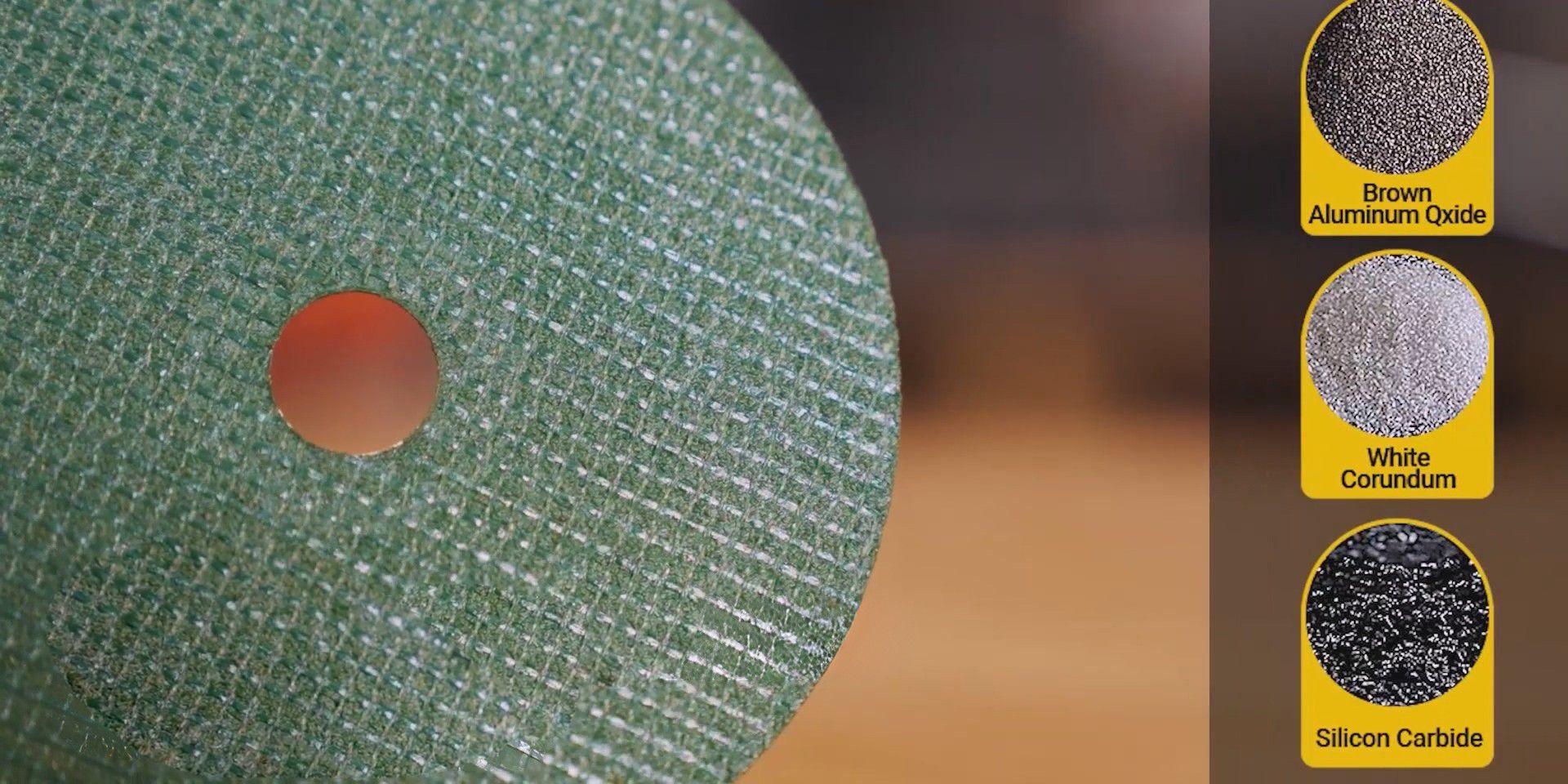
Aluminum oxide is the most commonly used abrasive for metal cutting. It offers stable performance and good durability for carbon steel and general metal applications.
White aluminum oxide has higher purity and friability. In stainless steel cutting, it fractures more easily, exposing new sharp edges and reducing heat buildup. This is why white aluminum oxide is often preferred for inox applications.
Zirconia abrasives are tougher and more impact-resistant. They are often promoted as a premium option, but in real production and usage, zirconia is not always the best choice.
In applications with sufficient cutting pressure and stable operation, zirconia provides long service life. However, in high-speed, low-pressure cutting, an optimized aluminum oxide formulation can perform equally well or better, especially in terms of cutting stability and cost efficiency.
In manufacturing, abrasive selection is not about choosing the most expensive grain, but about matching grain behavior to the actual cutting conditions.
Silicon carbide is sharp and brittle, making it suitable for non-ferrous metals and certain hard or brittle materials.
Ceramic abrasives represent advanced grain technology with microcrystalline structures. They offer aggressive cutting and long life in demanding industrial applications, but require precise bond control and are typically used in higher-end products.
Most cut-off wheels for metal cutting use resin bonding systems. Resin bonds provide flexibility, shock resistance, and reliable cutting performance at high speeds.
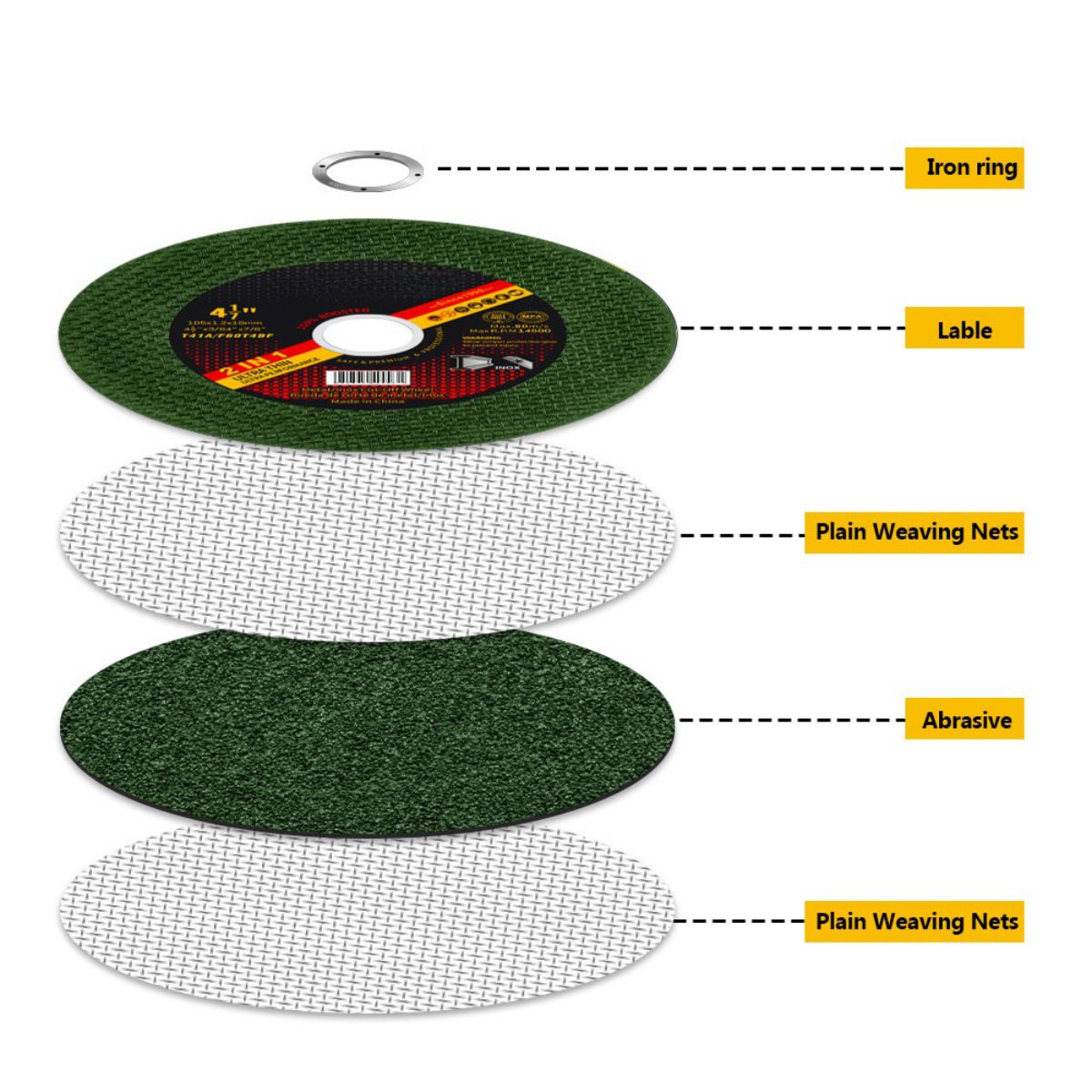
Reinforcement is critical for safety and stability. A commonly used industrial structure is the 2+1 fiberglass sandwich reinforcement, where two mesh layers are placed near the surfaces and one additional layer is embedded internally.
This structure improves:
Burst resistance
Edge stability
Cutting safety at high RPM
For thin cut-off wheels, reinforcement design plays a decisive role. Insufficient reinforcement often leads to edge cracking or sudden breakage, even when the abrasive quality appears acceptable.
Cut-off wheels can be produced using cold pressing, hot pressing, or semi-hot pressing.
Cold pressing is widely used for standard products and offers good dimensional control. However, in ultra-thin specifications, cold pressing alone may result in density variation at the wheel edge.
In actual production, semi-hot or hot pressing is often applied selectively to thin cut-off wheels to improve density uniformity and edge strength. Although this increases manufacturing cost, it significantly reduces the risk of edge cracking during high-speed cutting.
This is a practical example where manufacturing decisions are driven by real performance, not by production efficiency alone.
After pressing, cut-off wheels undergo a curing process to polymerize the resin bond. In professional manufacturing, curing is performed within industry-accepted temperature and time ranges validated by resin chemistry and wheel thickness.
Proper curing ensures:
Stable mechanical strength
Consistent cutting behavior
Reliable shelf life
Over-curing can make a wheel too brittle, while under-curing can lead to soft bonds and premature wear. This balance is one of the most sensitive aspects of cut-off wheel production.
Professional manufacturers implement multiple quality control steps, including:
Dimensional inspection
Visual inspection for surface defects
Speed and burst testing in accordance with EN12413
Balance checks for larger diameters
These procedures are essential to ensure safety and consistency, especially for export markets.
Cut-off wheels are used across a wide range of industries, including metal fabrication, construction, maintenance, and industrial manufacturing.
In export markets such as Southeast Asia, South America, and the Middle East, environmental conditions and usage habits vary significantly. Higher ambient temperatures and longer continuous cutting cycles place greater stress on bond systems and reinforcement structures.
In such environments, manufacturing stability and formulation consistency often matter more than nominal abrasive grade.
Thin cut-off wheels are often selected for speed, but they are not suitable for every application.
For example:
Heavy side pressure can cause thin wheels to flex and crack
Unstable workpieces increase breakage risk
Using a cut-off wheel for grinding is unsafe and incorrect
In some cases, a slightly thicker wheel results in lower overall cost due to improved stability, longer service life, and safer operation.
Professional suppliers should clearly communicate these limitations instead of promoting a single solution for all scenarios.
Selecting a cut-off wheel should start with the material being cut:
Carbon steel generally works well with aluminum oxide or zirconia
Stainless steel benefits from white aluminum oxide or optimized zirconia formulations
Thickness selection is equally important. 1.0 mm and 1.2 mm wheels are ideal for precision cutting and reduced heat input, while thicker wheels may be more appropriate for rough or unstable conditions.
Machine compatibility, operating speed, and safety requirements must always be considered.
Professional cut-off wheel manufacturers typically offer OEM and customization options, including:
Abrasive formulation adjustment
Wheel thickness and hardness control
Arbor size customization
Label and packaging design
Private branding
However, responsible manufacturers also define clear technical boundaries. Certain combinations of thickness, diameter, and operating speed may be rejected if they compromise safety or performance.
This balance between customization and technical responsibility is an important indicator of manufacturing professionalism.
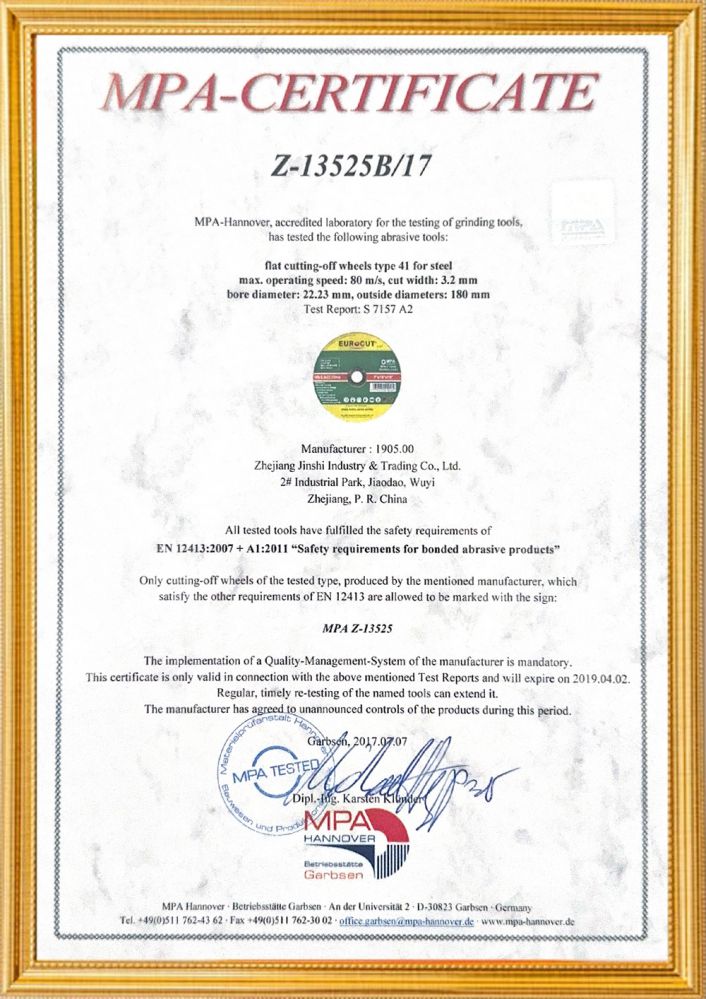
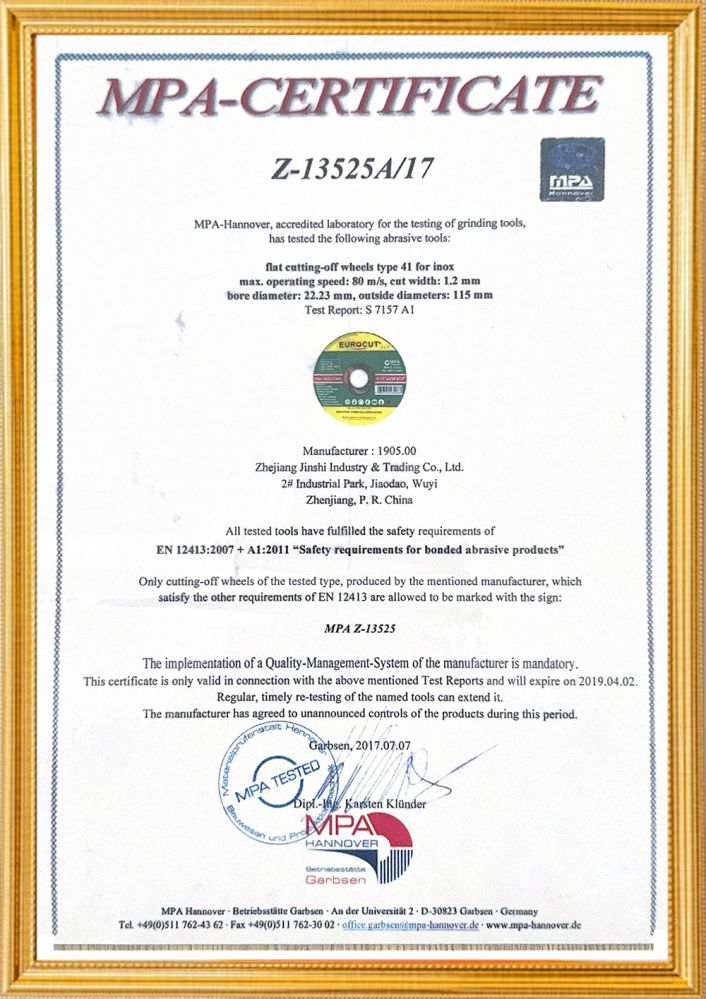
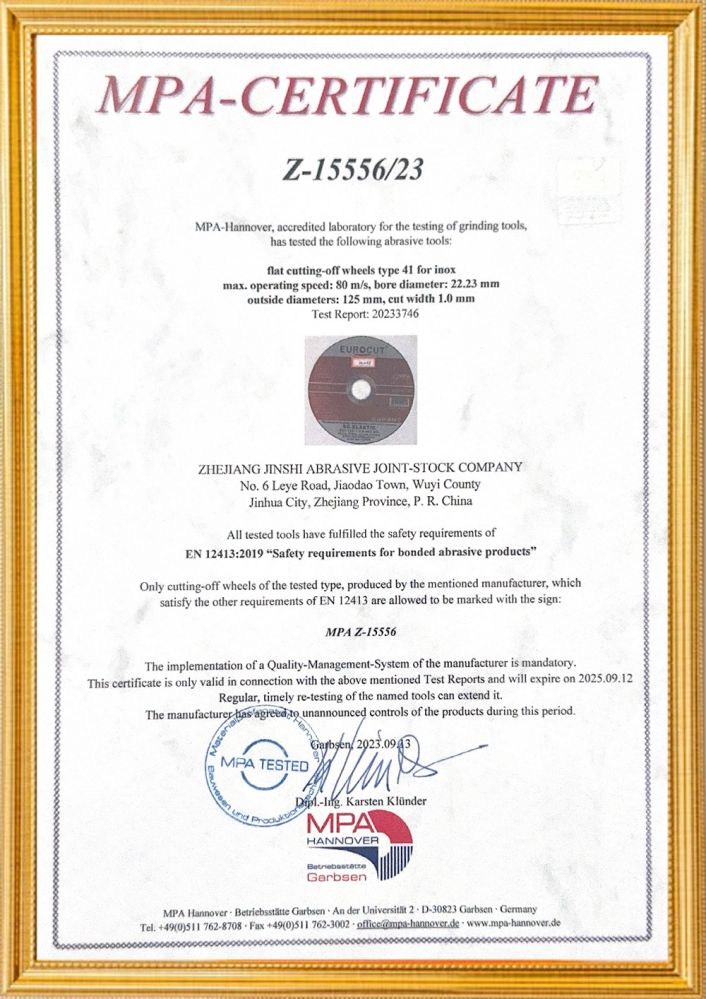
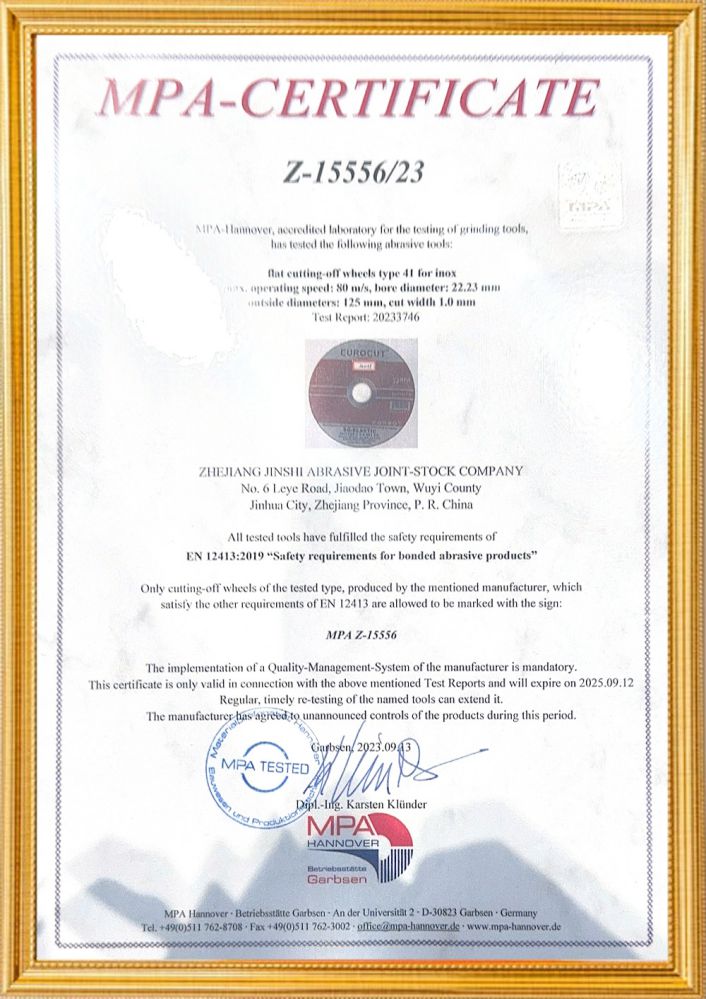
High-quality cut-off wheels are produced in compliance with recognized safety standards such as EN12413 for bonded abrasives. Compliance ensures that products meet minimum safety requirements for burst resistance and operational stability.
Standards compliance should be viewed as a baseline, not as a substitute for good manufacturing practice.
Cut-off wheels are engineered products that require careful material selection, controlled manufacturing processes, and strict quality management. Their performance in real-world use is determined not by a single factor, but by the combined effect of design decisions made during production.
For buyers and distributors, understanding these fundamentals helps in selecting reliable products and evaluating suppliers beyond surface-level specifications.
We offer a wide range of cutting discs for efficient cutting of different materials. Each cutting disc is strictly quality controlled and suitable for all types of angle grinders to meet industrial durability requirements.
Applicable materials: Steel
Binder type: Resin bond, reinforced fiber
Abrasive type: Aluminium Oxide A
Features:
Super hardness T grade
Extremely high cutting performance and long service life
Suitable for cutting thin plates, profiles, solid metal materials
Maximum speed up to 15,200 RPM
Recommended applications:
Fast cutting: 1.6mm / 2.0mm
Versatile cutting: 2.5mm
High stability cutting: 3.0mm

Applicable materials: Steel / Stainless steel (INOX)
Abrasive type: Aluminium Oxide A
Features:
Hardness I grade, taking into account both cutting force and wear resistance
Low burr cutting, high stability
More versatile, suitable for various industrial needs
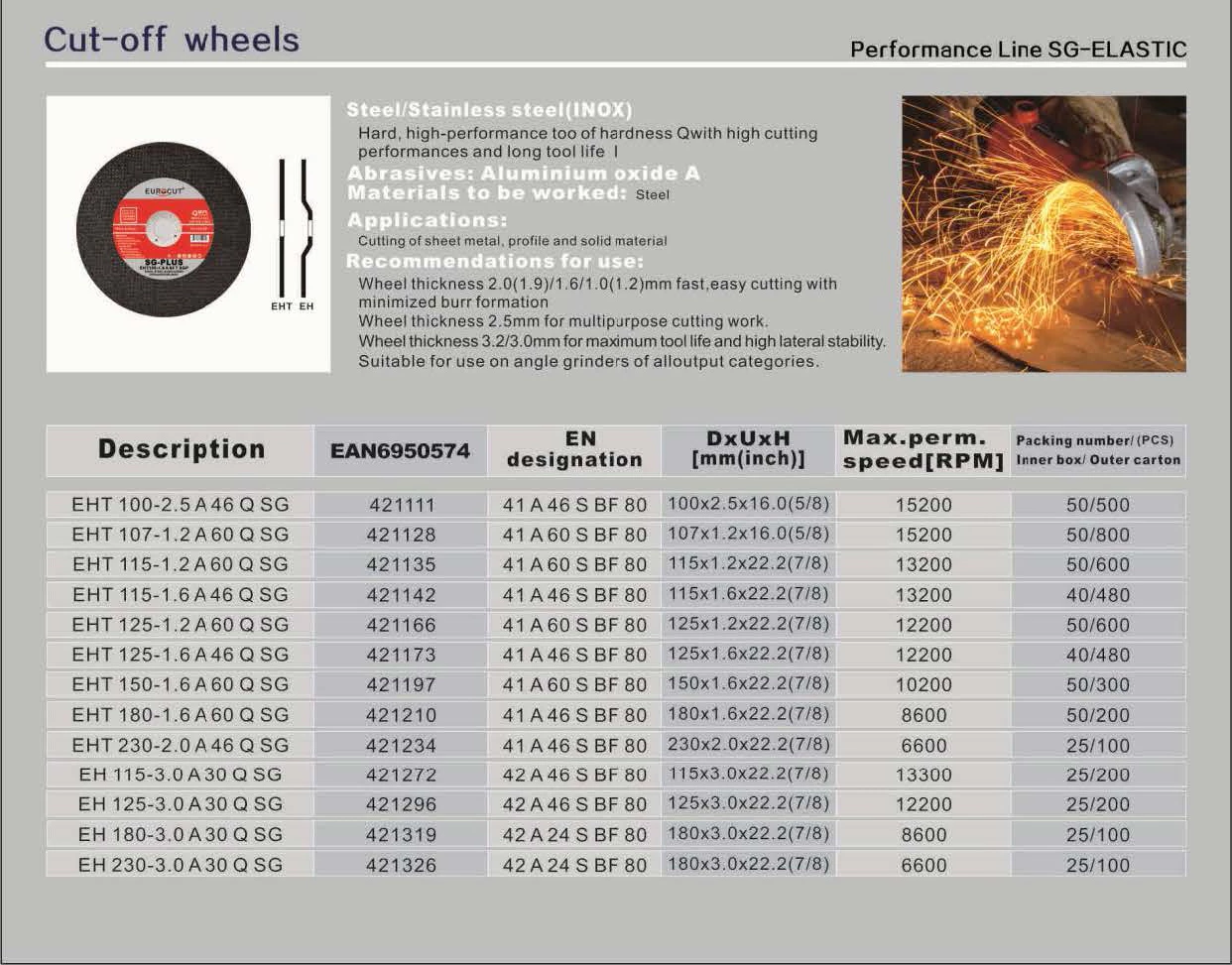
Applicable materials: Steel / Stainless steel (INOX) Abrasive type: Aluminium Oxide A Features:
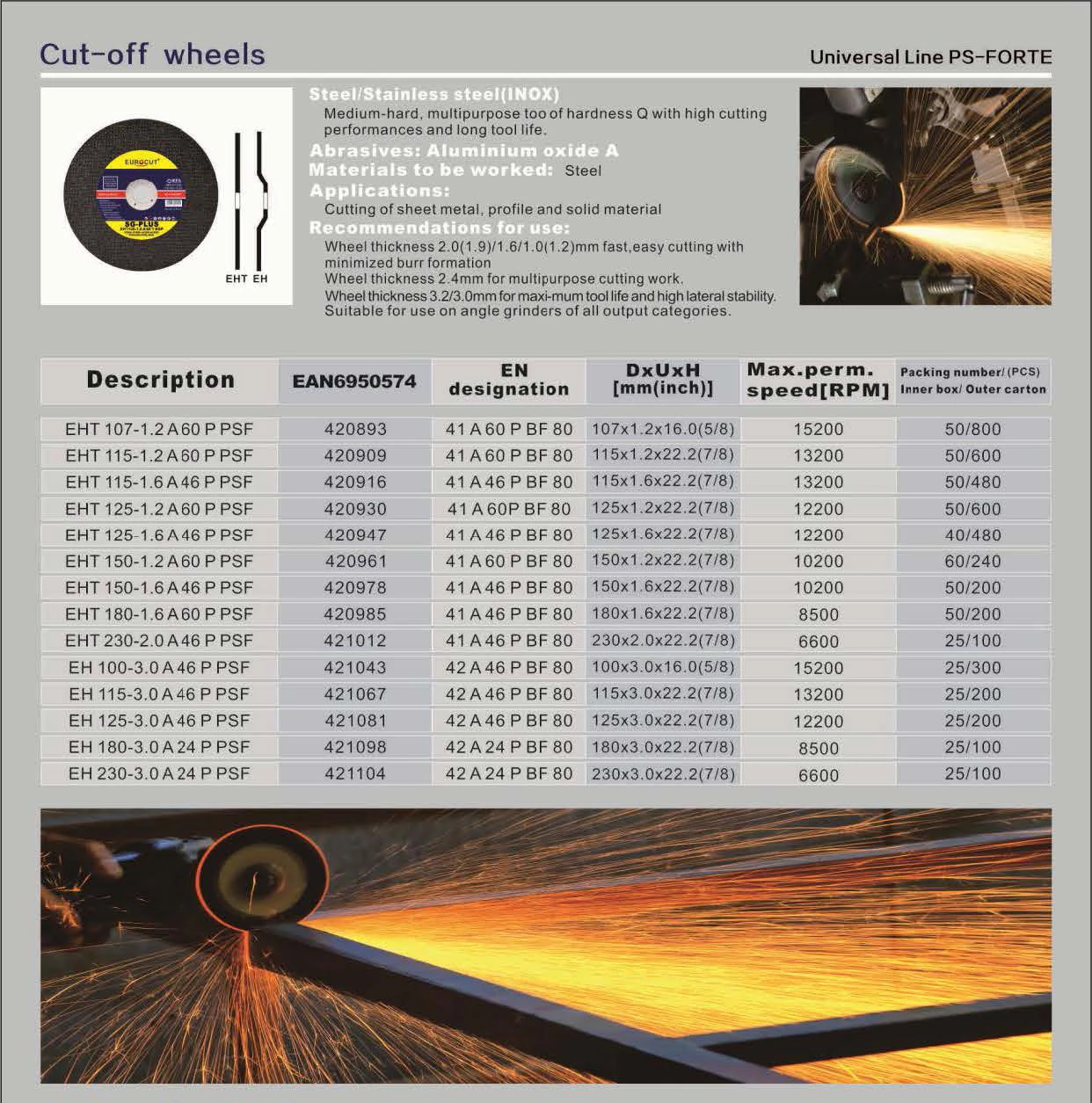
Our grinding wheels and abrasive cutting wheels are suitable for angle grinder discs, providing efficient cutting.
Applicable materials: Stone / Cast iron Abrasive type: Silicon Carbide C Features:
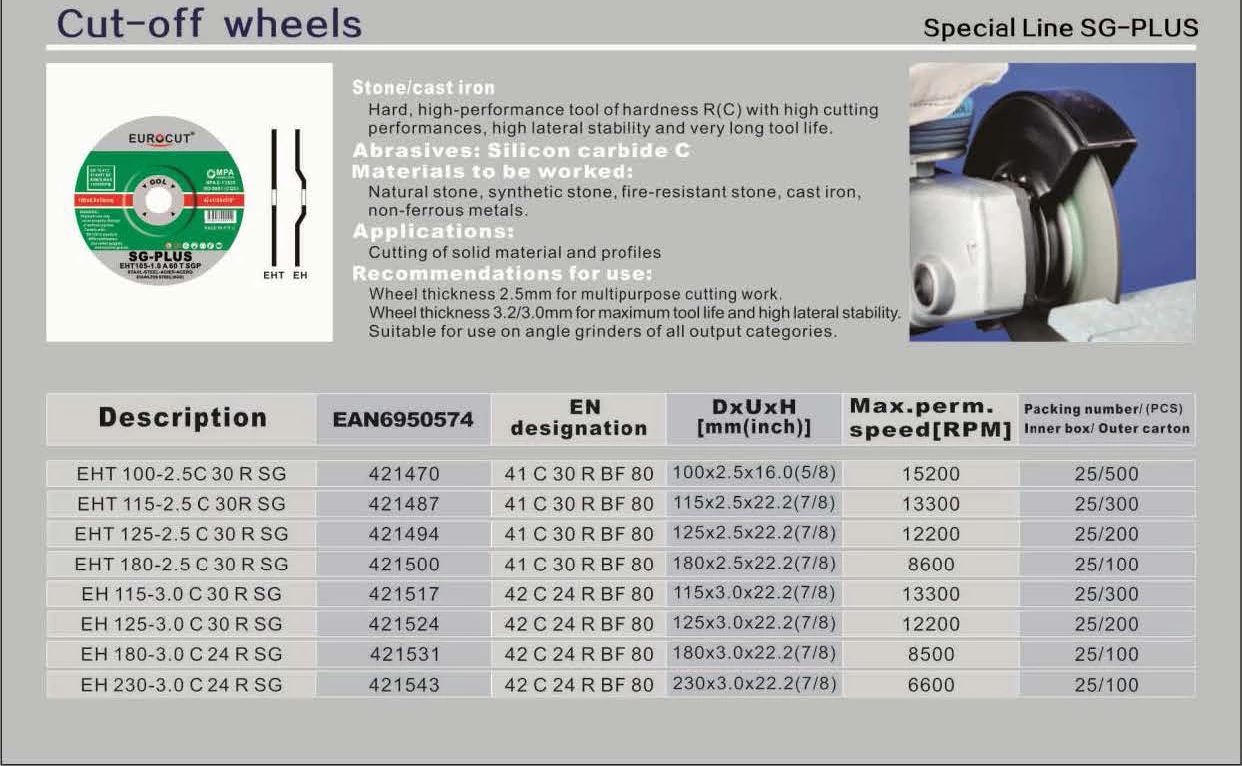
Improvements on proven and reliable products, maximizing your tool efficiency.
Precision grinding, ensuring a scratch-free surface on your workpiece.
Significantly extended tool life, tested in real-world applications.
Qing Yang is our carefully developed brand line, aiming to bring you a diverse range of high-performance, high-quality, cost-effective products. Each Qing Yang abrasive tool undergoes rigorous testing of components and production processes, meeting industry standards, and is trusted by engineers worldwide. Only when we are 100% confident in its superior quality will we label it with the Qing Yang brand—this is your guarantee of quality assurance.
Product specifications tell you what a wheel can do. These guides help you decide which one you actually need.
Material type, thickness, and machine power — the full selection framework explained.
When to use 1.0 mm, 1.6 mm, 2.5 mm, or 3.0 mm — matched to real cutting conditions.
Where thin wheels improve speed and where they introduce structural risk.
Load direction, structural design, and why they cannot substitute for each other.
The errors that cause most wheel failures in fabrication environments.
| MM | INCH | SPEEDR.P.M | SPEEDM/S | PCS/CTN |
| 100X3.0X16 | 4×1/8×5/8″ | 15200 | 80 | 400 |
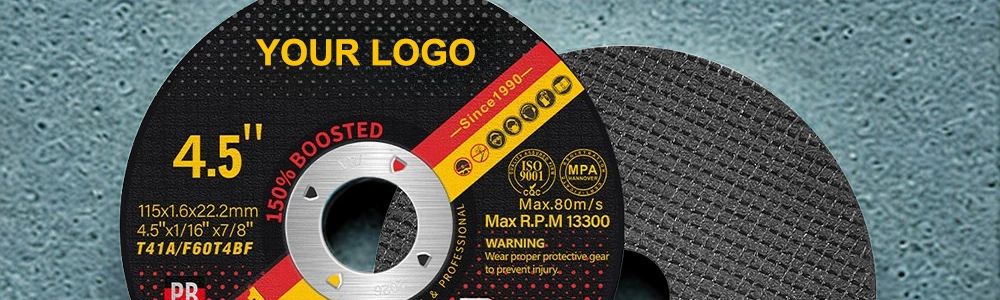
| 115X3.0X22.2 | 4.5×1/8×5/8″ | 13300 | 80 | 300 |
| 125X3.0X22.2 | 5×1/8X7/8″ | 12200 | 80 | 300 |
| 150X3.0X22.2 | 6×1/8×7/8″ | 10200 | 80 | 200 |
| 180X3.0X22.2 | 7×1/8×7/8″ | 8500 | 80 | 200 |
| 230X3.0X22.2 | 9×1/8×7/8″ | 6640 | 80 | 100 |
As a professional cutting disc manufacturer, Qing Yang® provides in-depth cutting disc customization services (OEM/ODM) to meet the personalized needs of global industrial customers. We support multi-dimensional technical customization, including:
Dimensional specification adaptation: We can produce a full range of sizes from 3-inch cutting wheel to 14-inch cutting wheel, accurately control thickness parameters (such as the critical 2.5mm ultra-thin design to optimize cutting efficiency), and customize the aperture according to equipment requirements (such as 25.4mm standard or special specifications).
Material and process upgrade: Optimize the bonded abrasive formula for metal cutting discs or stone cutting discs application scenarios, including options for ceramic cutting discs and granite cutting discs wholesale; support surface modification processes such as high temperature resistant coating and anti-static treatment to match the same level performance requirements of Norton and Klingspor.
Brand exclusive design: Based on the needs of cutting disc brand construction, we provide full-process packaging solutions (including customized printing, color identification system) and proprietary technical documents to help customers develop regional markets.
Our customized services cover all categories of products, including angle grinder cutting discs, heavy-duty cutting discs (300mm metal cutting discs), etc. Our technical team can replicate parameters or enhance performance based on the samples provided by customers, and also support small batch proofing and verification.
Understanding where cut-off wheels work is only half the picture. These guides define the boundaries that prevent tool failure and unsafe conditions.
If you’re in the tool wholesale business, you know that cutting tools are among the most practical tools. They’re used in a wide range of industries, from woodworking shops to metalworking shops to stonework. To ensure their efficient operation, they rely on the right accessories! Cutting discs are one of the most common accessories. Unlike tools, they’re consumables, so they’re in high demand. If you’re a wholesaler looking for a quick and profitable product, buying cutting discs in bulk will ensure your success.
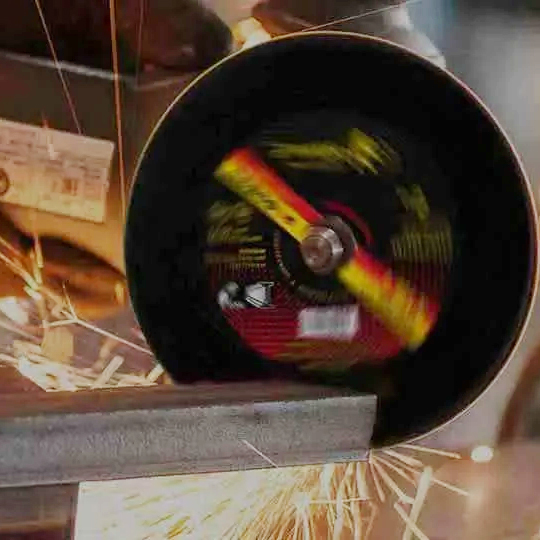
Cutting discs are made from a variety of materials, depending on the intended cutting application. Examples include diamond for hard stone, aluminum or silicon for specialized grinding, and steel for everyday strength. As a functional accessory for most grinders and many power saws, investing in wholesale cutting discs opens up a wider customer base, including suppliers and end users of angle grinders, chop saws, circular saws, and other equipment.
Now, let’s talk about the numbers that matter most to your profits.
With a MOQ of just 10,000 pieces (negotiable, of course), combined with Qingyang factory direct pricing, your resale gross margin can easily reach over 30%.
Real-world example: A Middle Eastern importer purchased a large quantity of our 4.5-inch optical discs. Thanks to the stable supply and fast turnover, their annual profits skyrocketed by 25%. This wasn’t a miracle, but rather shrewd purchasing! Now, they’re our most loyal customer and refer us many new businesses.

Our wholesale cutting discs are ideal for distributors seeking high margins. Becoming a Qingyang distributor is more than just selling products; it’s about building a solid profit advantage in the tool industry. Are you ready to share in these lucrative profits?
Choosing a cutting disc supplier should be as comprehensive as possible. First, consider the product range.
There are numerous cutting blade types available, each suited to different applications and tools. Key types include:
Different cutting discs are suited for different equipment. For example, metal cutting discs are best suited for use with angle grinders, chop saws, circular saws, and other power tools used for metalworking. Of course, there are also multi-purpose cutting discs that are versatile and can handle cutting wood, stone, or metal effectively.
A comprehensive inventory is essential for bulk cutting discs, but quality is paramount. Prioritize ISO/MPA certifications and years of industry experience, such as Qingyang’s customized services, which optimize durability for materials like diamond, aluminum, or silicon.
A: These include, but are not limited to, steel, stainless steel, stone, cast iron, and non-ferrous metals. In addition to general applications, we also offer specialized applications such as:
A:
A: We are a professional manufacturer of abrasive tools with over 35 years of experience.
A: Yes, OEM branding is available . We can also provide free label design services.
A: Yes, free samples are available for quality testing. However, the shipping cost is borne by the customer.
A: Yes, we are certified with MPA and ISO standards.
A: Normally, delivery takes about 20 days after receiving payment .
In-depth guides covering selection, thickness decisions, safety boundaries, and tool comparisons — all specific to cut-off wheel applications.
Material type, thickness, and machine power — the full selection framework.
→ ThicknessWhen to use 1.0 mm through 3.0 mm matched to real cutting conditions.
→ Thin WheelsSpeed advantages and structural conditions where thin wheels fail.
→The operating errors behind most wheel failures in production environments.
→ BoundaryFive scenarios where structural failure risk becomes critical.
→ ComparisonLoad direction, structural design, and why substitution is unsafe.
→ English English
  العربية
 Español
 Tiếng Việt
 ไทย
ไทย
 Polski
 Русский